SHIPPING FEES
Free from 70,00 € (still 70,00 €)
from
5,90 €


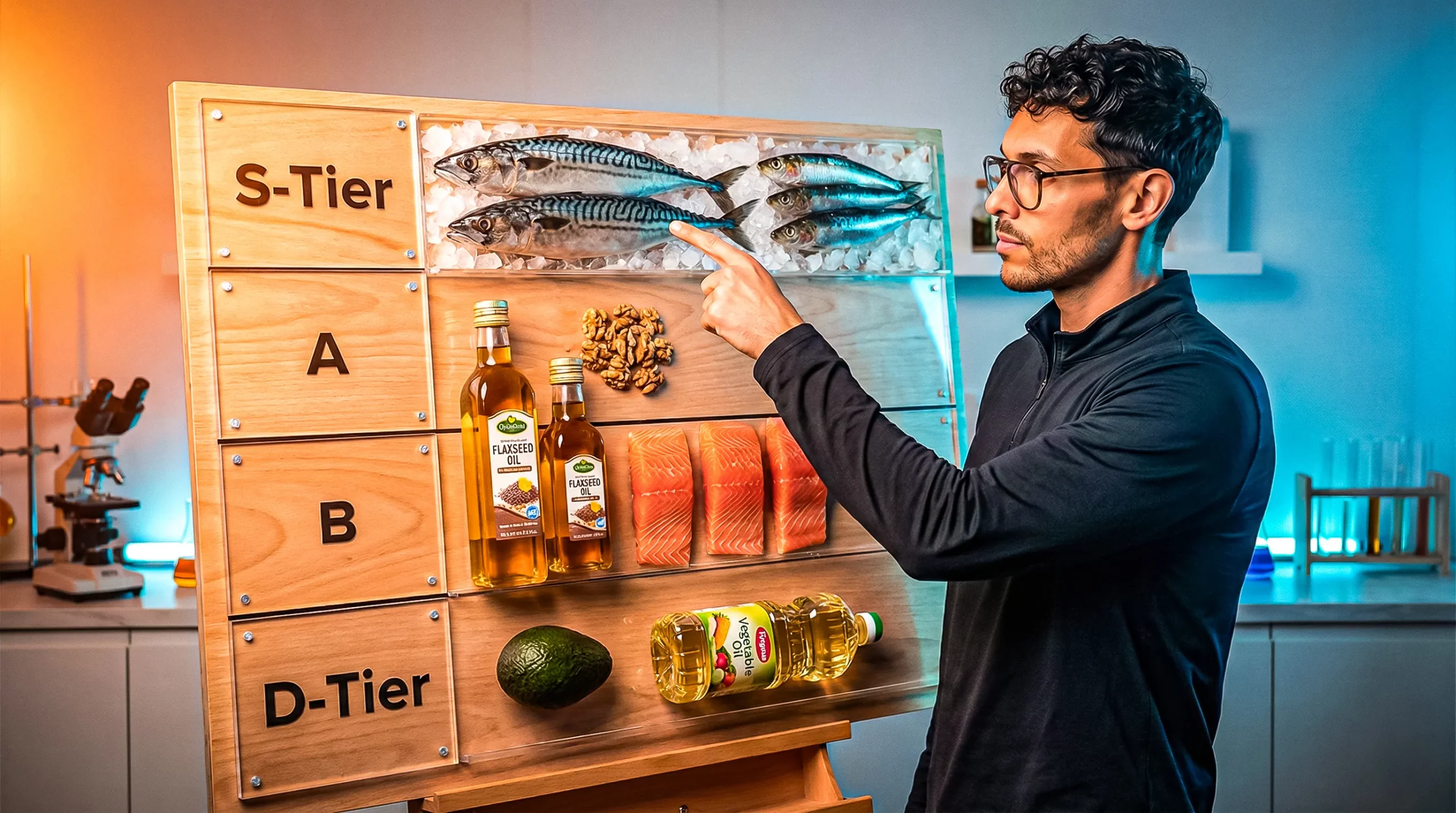
Together, we will identify the real sources of EPA and DHA so you no longer confuse simple lipid intake with a true performance lever. Get ready to discover the essential nutritional choices to take your progress to the next level.
Omega-3s are very important for our bodies, yet we have a big problem with them: your body is unable to produce these acids. Therefore, you must provide them through your diet. Moreover, there are 3 types: ALA, EPA, and DHA, and they are not twins (or triplets, actually).
ALA (alpha-linolenic acid) is the plant-based precursor. It is found in plants, seeds, and oils. It’s a useful base, but beware, it’s not the most biologically “active” form.
In contrast, EPA and DHA are the marine forms, directly usable by the body. These are what your brain and heart truly demand to function at full capacity.
Now we will delve into another issue of the day: In addition to not being able to synthesize Omega-3s on its own, the human body struggles to convert ALA to EPA, and it’s even worse for DHA. The conversion rate is very low, often negligible. This is crucial information to avoid mistakes.
Relying solely on plant sources to meet your DHA needs is a mistake. Direct intake is necessary. That’s why it’s advised to diversify your sources to avoid deficiency.
These “good fats” are the pillars of your cardiovascular health (lowering triglycerides). They also protect your brain, nervous system, and eye health (AMD). In short, for years we waged war on fats without realizing that for Omega-3s, we had an ally, a true armor for your/our cells.
Let’s start our little tour of foods where you can find the famous EPA and DHA, which are by far the most effective.
If you’re aiming for performance, fatty fish remain the most direct and richest source of EPA and DHA. It’s the absolute reference for any athlete concerned about recovery and health. To ensure sufficient intake, regular consumption 2 to 3 times a week is recommended.
Of course, you’ll need to opt for fresh fish if you want to achieve the ideal nutritional profile. If that’s very difficult for you, don’t overlook frozen options (fish are often frozen right on the boat) or canned options like sardines and mackerel, which remain excellent practical and very affordable alternatives.
To help you see clearly and optimize your diet, this table ranks the true champions of omega-3s. These values are precise averages for 100g of cooked fish.
Take a good look at these numbers: mackerel and sardines are exceptional choices. They are both extremely rich in good fatty acids and particularly economical. And don’t you notice anything about the oils… Yes, cod liver oil that your (great) grandparents used to eat straight from the spoon long ago, the ancestor of Omega-3 supplements?
In reality, fish do not produce omega-3s themselves; they accumulate them by eating microalgae. Algae, such as spirulina or schizochytrium, are therefore the original source of DHA and are an excellent option for vegetarians.
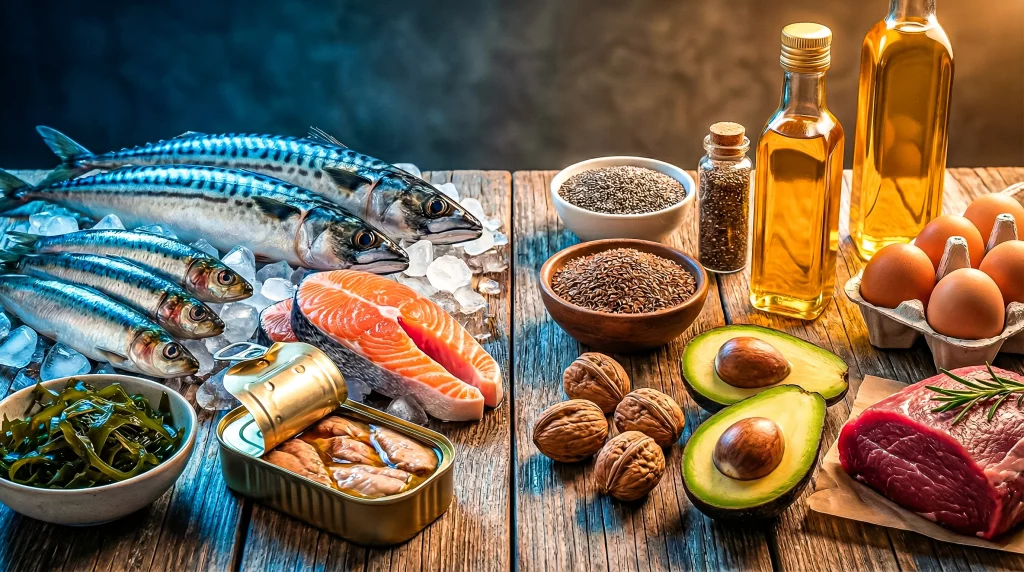
Marine sources are king, that’s a fact. But the plant world also has its cards to play, especially for ALA intake. As you can see, if you’re vegan or fish isn’t your thing, this section is for you.
To load your plate with ALA, vegetable oils remain the most concentrated option. A simple spoonful is often enough to transform the nutritional profile of a dish, making the integration of these lipids easy on a daily basis.
Well, that’s good, but we’re not going to live on liquids alone. Fortunately, seeds and nuts are another major source of ALA, with the undeniable advantage of providing fiber and other essential nutrients for athletes.
We often forget, but some leafy green vegetables contain ALA. Even though the quantities are smaller, purslane, lamb’s lettuce, watercress, and spinach deserve your attention.
Preferably consume them raw, in salads, to preserve the small amount of omega-3 they contain. Consider it a valuable bonus for your health, not as a main source.
We always think of fish or flaxseeds, but other everyday foods can play a role. Provided you choose them wisely.
The answer is yes, but with a huge caveat: it all depends on the animal’s diet. Grass-fed animals provide meat naturally richer in omega-3 than those fed corn and soy in intensive farming. It’s night and day for your lipid profile.
Animals fed flaxseeds will radically boost the omega-3 content of the meat.
Don’t be fooled by marketing. A battery egg (code 3 or 2) is nutritionally poor in good lipids. The yolk is often pale, and the omega-6/omega-3 ratio is disastrous for inflammation.
To get truly quality eggs, you’ll unfortunately—or fortunately—have to pay the price. Aim for free-range eggs (code 0 or 1), but especially those explicitly enriched with omega-3. The hens consumed flax, guaranteeing up to 300 mg of omega-3 per egg. It’s written black and white on the box: read it.
Let’s debunk a persistent myth: avocado is not the omega-3 bomb we think it is. It’s an excellent source of fats, sure, but they are mostly omega-9. Its ALA content is negligible (0.1 g) compared to its omega-6 content.
As for enriched products like milks or juices, be cautious. They can be handy, but check the label: is it algae DHA or just a bit of flax? Look at the exact amount. Consider these options as a marginal bonus, never as the cornerstone of your sports diet.
Knowing which foods are rich in omega-3 is good. Knowing how to intelligently incorporate them into your diet to optimize performance is better.
As you understand, Omega is a bit of a mess for our body; it can’t create it, and when it finds a source, it struggles to process it… And that’s not all, if you want to optimize everything, you’ll need to maintain a good balance between different Omegas.
Eating salmon won’t suffice if your ratio is off.
Today, we are off the charts with a pro-inflammatory imbalance of 15 to 1, caused by processed oils.
Result: chronic inflammation sets in and silently crushes your physical progress.
The goal is to restore the balance. Drastically reduce sunflower oil and ultra-processed products. Meanwhile, load up on marine sources and flax. It’s mathematical: less inflammation means better muscle recovery.
Processed oils, ultra-processed products → chronic inflammation that hinders recovery
Let’s be honest: reaching optimal EPA and DHA quotas solely through diet is a challenge, especially if you dislike the taste of fish. For a demanding athlete, the intake must be constant.
If you’re struggling to keep up, supplementation is a tactical option. Opting for quality omega-3 supplements based on fish oil secures your intake. You ensure your dose of essential fatty acids without having to cook every day. Simple, effective.
Optimizing your omega-3 intake is not an option; it’s a physiological necessity for longevity. Whether through diet or targeted EPA and DHA supplementation, you now have all the keys to take action. Don’t let an inflammatory imbalance hinder your progress: integrate these good fats today.
The superior quality of our product is guaranteed with a TOTOX below 4, ensuring the absence of heavy metals and a high concentration of EPA and DHA.
The omega-3 fatty acids EPA and DHA, delicate and sensitive to oxidation, are protected thanks to our rigorous manufacturing process.
We use impeccable raw materials, such as sardines, anchovies, and mackerel, to obtain a superior quality oil.
Vous devez etre connecte pour laisser un commentaire.