

Why Hybrid Athletes are Perfect?
Do you have what it takes to become a hybrid athlete?
Answer these 6 questions about your preferences and mindset to find out if the hybrid lifestyle is right for you.
Your result
Answer the 6 questions to discover your profile
What do Mat Fraser, Rich Froning, Hunter McIntyre, and Fergus Crawley have in common? These guys don't fit into any box. They're too powerful to be just runners. Too enduring to be just lifters. They are hybrid athletes. Don't believe me? Then read on.
Rich Froning, four-time champion of the CrossFit Games. He deadlifts over 230 kg and powers through hour-long workouts without breaking a sweat
Mat Fraser, former weightlifter, clean & jerk at 160 kg and runs 5 km in under 20 minutes
Fergus Crawley, he squatted 227 kg and ran a marathon on the same day
As for Hunter McIntyre, he deadlifts 225 kg and sets explosive times in the HYROX event.
That’s it, a hybrid body. Strong, resilient, agile, and ready to take on anything.
The hybrid athlete, what is it exactly?
Muscles are great, but they’re even better when they serve a purpose
Forget about hyperspecialisation. The hybrid athlete is the versatile sports person who refuses to choose between raw strength and fundamental endurance. This is an athlete who prefers the pursuit of overall excellence: performing well under a heavy barbell as well as on a demanding trail, mastering both their strength and endurance.
This idea of the complete athlete had already emerged with disciplines like CrossFit and exploded with the advent of Hyrox. The goal is clear : build an absolute functional fitness to be ready for any physical challenge, without ever backing down. That’s why in CrossFit you can find running or rowing in the same WOD, followed by front squats, then climbing the rope to finish off by walking on your hands
By the way, those who have transitioned from weightlifting or bodybuilding to CrossFit or Hyrox will tell you (and I know this well), this kind of discipline helps you understand the purpose of your body and your muscles!
The qualities that make a difference
This all-in profile demands, as you can imagine, a strong and muscular physique, combined with exceptional resilience and endurance. The hybrid athlete won't focus on enhancing their strengths first but will instead work on their weaknesses, which will ultimately lead, thanks to the body's synergies, to an overall improvement in the athlete's performance.
To be well-rounded, you don't have to be the best at everything (although that's obviously the goal) but you should definitely avoid being the worst in any category or movement.
Versatility isn't just about training or competition; it's also crucial during recovery.
Why become a hybrid athlete?
Well, it's all very nice, but what's the point of being complete every day? Well, because it's the holy grail for your body.
You boost your cardiovascular health through cardio while maintaining a lean muscle mass, and your metabolism is running at full throttle. You draw the the best of both worlds, and this will result in you having robust health.
This athletic versatility breaks the monotony. You never get bored and stay capable of excelling in any activity. You can feel it during workouts; the routine doesn't set in.
Here’s why we should all strive for this performance model :
- Athletic versatility : be ready to take on any sporting challenge
- Optimised overall health : combined benefits for the heart and muscles
- Injury Prevention : a more balanced and resilient body
- Athletic Longevity : less wear and tear from hyper-specialisation
The 5 components of the hybrid athlete
What does hybrid athlete training involve?
Endurance
Having muscles is great, but knowing how to use them for a long time is even better. To achieve this, you will need to master your energy pathways : Zone 2 for endurance and HIIT (High-Intensity Interval Training) for anaerobic capacity
Don't get stuck on running, not only because it can become repetitive, but because being hybrid means being well-rounded, so mix up your activities to avoid monotony and challenge your body: swimming or cycling are excellent for protect your joints.
If you're at the gym, you should focus on the rowing machine, the ski erg, and the bike erg; you'll see, it's pure joy. No joke, these are the perfect tools for the hybrid athlete.
Strength
Let's be clear: without strength, you won't last the distance. It's the foundation that supports everything, including your endurance. If you're not making progress on the basics, your power will remain stagnant. You need to load the bar, but not with your ego, otherwise you risk injury.
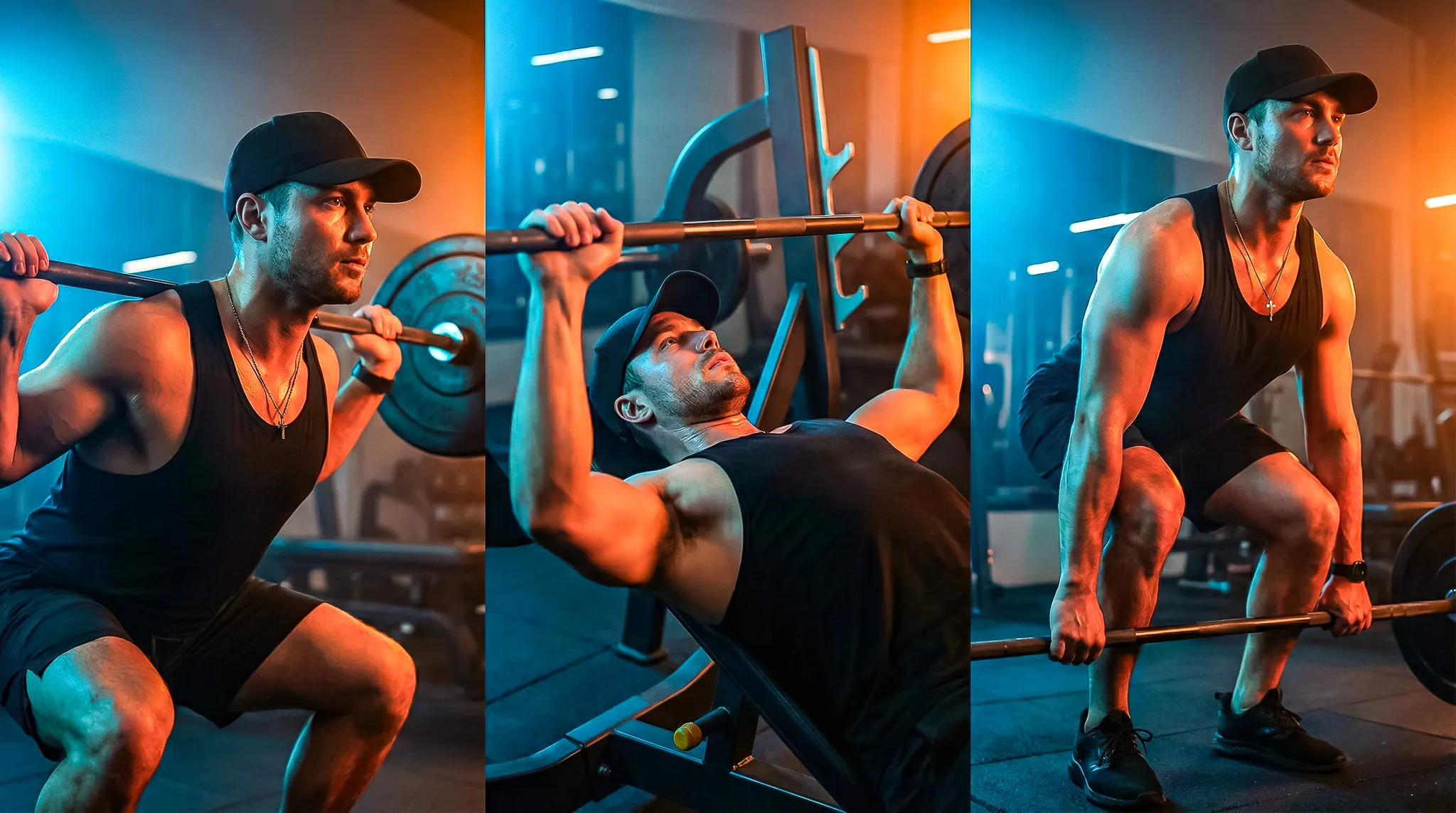
To build a shield of strength, forget about guided machines, or only use them rarely in a targeted way if you're really lagging behind. Otherwise, focus on the "Big Three", the only compound movements that matter for increasing strength :
- The Squat : for leg and core strength
- The Deadlift : for the posterior chain and overall strength.
- The Bench Press : for upper body strength.
Then, convert this strength into speed with weightlifting (Snatch, Clean & Jerk). It’s the secret to gaining explosiveness. To track your progress, you can calculate your 1 RM (one-rep max)to avoid going overboard with weights that are too heavy, or on the contrary, underestimating your strength
Gymnastics and mobility
You can't reach your back because of your shoulders or biceps; perhaps you're not focusing on your mobility, one of the key pillars of progress, just like gymnastics, which will help with your agility and coordination, as well as your deep muscles.
Handstands, pull-up bar work, and bodyweight exercises, all contributing to a balanced result while also being effective
Example programme for a Hybrid Athlete
This table provides a solid foundation, but it needs to evolve with your abilities. Think of it as a adaptable starting point at your level and your goals.
The balance between workouts is key to lasting without breaking down. Complete rest days are absolutely non-negotiable for ensure your progress. Without them, stagnation is lurking.
| Day | Session 1 (Morning) | Session 2 (Afternoon/Evening) |
|---|---|---|
| Monday | Strength (Focus on Squats + Accessory Movements) | Rest or Mobility |
| Tuesday | Endurance (Running – Short and Intense Intervals) | Bodyweight Training |
| Wednesday | Strength (Bench Press Focus + Pulls) | Rest or Mobility |
| Thursday | Complete rest (or very light active recovery: walking) | – |
| Friday | Strength (Deadlift Focus + accessory movements) | Endurance (Rowing machine – Moderate effort 30-40 min) |
| Saturday | CrossFit / Hyrox style WOD (A blend of strength and endurance) | Rest |
| Sunday | Fundamental endurance (Long, slow outing: running or cycling) | – |
What equipment for a hybrid athlete?
So it all depends on your level. To get started, you might not need much – a good pair of trainers and a skipping rope for the cardio side, a bit of imagination to turn everyday items into workout tools (think of a sturdy box for an improvised box jump), a reasonably heavy kettlebell for various movements (swing, goblet, snatch, clean and jerk), and a weighted vest to add difficulty to bodyweight exercises, and finally something to hang from for pull-ups.
However, if you're looking to level up, you'll need to invest in equipment such as rowing machines, wall balls, or even plates and bars if you want to get into something like CrossFit. For that, you'll likely need to step into a specialised facility or create the dream of many: a garage gym.
The other factor X: nutrition and recovery
We won't be teaching a large portion of the people reading this article anything new, but training isn't everything. It's also essential to eat well and get enough rest
Nutrition
Nutrition isn't just about survival; it needs to support this dual energy demand. For a hybrid athlete, a solid foundation often relies on precise distribution. Aim for around 40% carbohydrates, 30% protein, and 30% fats. It’s the perfect starting point
Carbohydrates remain your primary fuel and should be increased on days of intense endurance. Proteins, on the other hand, ensure muscle repair after your strength sessions. Never underestimate this dynamic balance.
But to adjust these ratios, you need to know your actual figures. Start by calculate your basal metabolic rate and caloric needs.
Recovery
Recovery is not an option for the weak; it’s an integral part of training. This is precisely where your progress is taking shape. Sleep should be your top priority: aim for 7 to 9 hours a night. Without it, you're just treading water.
Chronic stress undermines your efforts, so manage it actively. Meditation and yoga are not a waste of time.
For optimise your recovery, incorporate these habits:
- Quality Sleep : the foundation of all recovery.
- Self-massage : use a foam roller to relax your muscles
- Mobility routines : to maintain healthy joints
- Hydration and post-workout nutrition : to replenish stock.
Listen to your body to last and avoid injuries
The hybrid training places an immense strain on your body. If you ignore the signals of fatigue, you head straight for injury or overtraining. Your body is constantly communicating with you. Learn to listen to it before it forces you to come to a complete stop.
Distinguish the good pain of muscle soreness from the "bad" sharp or joint pain. Knowing how to adjust your training, reduce the intensity, or take a rest day is not a sign of weakness. It’s a proof of athletic intelligence for lasting performance.
The journey of the hybrid athlete is demanding, but the reward is one absolute versatility. With this plan, you have the tools to break the routine and boost your performance. Don't forget: Patience is your greatest ally. And you, what is your next goal: a marathon or a new 1RM ?
About the author

Cyril Certain
Founder and CEO of DIX Supplements, Cyril has always taken a rigorous approach to nutrition and performance. After years of searching for truly high-quality supplements and never being satisfied with what he found on the market, he made a straightforward decision: to create his own. This is how DIX was born, a brand designed for those who refuse to compromise.