5€ on your First Order with the code BEA10Gift offered from €150 purchaseFree shipping on orders over 70€More than 10,000 satisfied customersPayment 100% secureShipping within 24h
🌿 Discover if Rhodiola is right for youAssess in 2 minutes if Rhodiola rosea can help you manage stress, improve performance, and regain energy. Receive a personalized recommendation based on your profile.✓ Personalized dosage according to your needs | ✓ Optimal timing for intake | ✓ Only 9 questions🌿 Do you need Rhodiola?Find out if Rhodiola rosea is suitable for your profile and receive a personalized recommendationQuestionPreviousNextSee my resultsRestart the testYour Rhodiola profileAnswer the questions to discover your personalized recommendationRelevanceHow do you rate your daily stress level?Very lowLowModerateHighVery highHow would you describe the quality of your sleep?ExcellentGoodAveragePoorVery poorDo you experience mental fatigue daily?NeverRarelySometimesOftenAll the timeWhat is your level of physical fatigue?Very lowLowModerateHighVery highDo you have difficulty concentrating on a task?RarelySometimesOftenWhat is your level of physical activity?SedentaryModerate (1-2x/week)Active (3-5x/week)Athlete (6-7x/week)Do you regularly feel anxiety?RarelySometimesOftenIs your recovery after exertion slow?NoSometimesYesWhat is your main goal?Manage stressImprove physical performanceIncrease concentrationRegain energyImprove sleep🌟 Rhodiola highly recommendedYour profile indicates that Rhodiola rosea could provide significant benefits. Your level of stress, fatigue, and goals make this adaptogen an ideal ally to regain balance and vitality.Personalized recommendations:Dosage: 400-600 mg per day of standardized extractTiming: In the morning upon waking or early in the dayDuration: 8-12 weeks course, renewable after a breakExpected benefits: Stress reduction, improved energy, better concentration, and optimized recovery✅ Rhodiola beneficial for youYour profile shows that Rhodiola rosea can help improve certain aspects of your well-being. Regular supplementation could support your energy, concentration, and stress management.Personalized recommendations:Dosage: 300-400 mg per day of standardized extractTiming: In the morning or early afternoonDuration: 6-8 weeks course, evaluate effectsExpected benefits: Support of mental energy, improved stress resistance, and cognitive performance💡 Rhodiola optionalYour profile indicates a relatively low level of stress and fatigue. Rhodiola remains an interesting supplement to optimize your performance, but it is not essential in your current situation.If you wish to try:Dosage: 200-300 mg per day of standardized extractTiming: In the morning for a tonic effectDuration: 4-6 weeks course to testExpected benefits: Optimization of alertness and performance during demanding periods
Overwhelmed by daily stress and tired of trying various solutions without lasting results? Rhodiola rosea, this ancient adaptogenic plant, might just be the natural ally you’re looking for. Native to cold mountainous regions like Siberia and Tibet, it has been used since antiquity for its remarkable stress-regulating, mood-enhancing, and physical and mental performance-boosting properties. In this article, we delve into the scientifically proven benefits of rhodiola rosea and how it can help you regain balance and vitality in the face of daily challenges.
A DIX video. Length: 7 min 54.
Origins and History of Rhodiola rosea
An Ancient Adaptogenic Plant
Rhodiola rosea is a perennial plant native to cold mountainous regions like Tibet, Siberia, and Scandinavia, where it has developed extraordinary adaptive capabilities to survive in extreme conditions.
📜 Millennial history of Rhodiola rosea13th century BC🏛️ Ancient GreeceThe Greeks use Rhodiola to treat fatigue and headaches. First documented traces of its therapeutic use.8th century⚔️ Scandinavian VikingsViking warriors prepare Rhodiola-based brews to increase their physical strength and endurance before battles.Antiquity🏯 Ancient ChinaRhodiola is considered a sacred plant with recognized therapeutic properties to improve mental and physical health.18th century🇷🇺 Traditional Russian medicineRhodiola becomes an essential element of the Russian pharmacopoeia, used to enhance resistance to extreme conditions.1947🔬 Birth of the concept "adaptogen"Russian pharmacologist Nicolaï Lazarev first mentions the term "adaptogen" while studying plants like ginseng.1960s🧪 Soviet researchSoviet scientists study Rhodiola in the laboratory at Stalin's request, seeking to increase the physical and intellectual resistance of the population.Today🌍 Modern global medicineRhodiola is used worldwide in the form of dietary supplements to combat stress, fatigue, and improve physical and mental performance.
The use of this adaptogenic plant dates back to antiquity, with traces from the 13th century BCE among the Greeks who used it to treat fatigue and headaches. From the 8th century, the Vikings prepared beverages from rhodiola rosea to increase their physical strength and endurance before battles. In China, it was considered a sacred plant with recognized therapeutic properties to improve mental and physical health. In the 18th century, rhodiola established itself as an essential element of traditional Russian medicine.
Modern Scientific Rediscovery
It was Russian pharmacologist Nicolaï Lazarev who first mentioned the term “adaptogen” in 1947 while initially working on ginseng. From the 1960s, Soviet scientists began studying rhodiola in laboratories, at Stalin’s request, who wanted to find ways to increase the physical and intellectual resistance of the Russian population.
Since these fundamental discoveries, rhodiola has been integrated into modern medicine and studied for its numerous therapeutic properties in various countries. To learn more about the plant, check out our article on 5 Important Questions About Rhodiola Rosea. It is now used worldwide in the form of dietary supplements to help combat fatigue, reduce stress, alleviate anxiety, and improve physical and mental performance, benefiting athletes and those under daily pressure.
Composition and Active Principles of Rhodiola
Essential Bioactive Compounds
The root of rhodiola rosea contains over 140 active compounds that give it its exceptional adaptogenic properties.
Let’s now examine in more detail the elements that make this ancient plant a choice ally for athletes and those facing stress. You are not just consuming a root but a true biochemical treasure whose effectiveness relies on a complex synergy between different molecules. Nature has developed over the centuries a remarkably balanced cocktail that explains why rhodiola is among the most sought-after adaptogens. Understanding these active principles will allow you to optimize your use of this supplement.
Here are the main active compounds of rhodiola and their specific functions.
KEY COMPOUNDRosavineIt is one of the most studied active compounds of rhodiola. Rosavins (rosavin, rosarin, and rosin) are specific to Rhodiola rosea and are the main quality marker.Standardization: Quality extracts are titrated at 3-5% rosavinsKEY COMPOUNDSalidrosideIt is another important active compound present in rhodiola. It plays a major role in the plant's adaptogenic, neuroprotective, and anti-fatigue effects.Standardization: Quality extracts are titrated at 1-2% salidrosideANTIOXIDANTFlavonoidsRhodiola contains flavonoids with antioxidant properties. These compounds protect cells against oxidative stress and contribute to the plant's protective effects.Function: Cellular protection and synergy with other active compoundsANTIOXIDANTTyrosolThis natural phenolic antioxidant is also present in Rhodiola rosea. It contributes to the plant's protective and adaptogenic effects in synergy with other compounds.Function: Antioxidant activity and cardiovascular protection🔬 The importance of standardizationThe standardization of rhodiola rosea extracts is an important element to ensure its therapeutic efficacy. A double titration in active principles (typically 5% in rosavins and 2% in salidroside) ensures a constant and optimal concentration of beneficial molecules.When choosing a rhodiola dietary supplement, this standardization is your guarantee of obtaining reproducible effects in line with clinical studies. Non-standardized extracts may present significant variations in concentration, resulting in random efficacy that we all seek to avoid in our quest for performance.
The Root, Essential Part of the Plant
The root of rhodiola, specifically its rhizome, concentrates the majority of the plant’s active principles. It is distinguished by its characteristic rose-like scent, hence the name “rosea,” and its richness in bioactive compounds that make it the preferred part in phytotherapy.
The harvesting and preparation of the rhodiola root follow a meticulous process that preserves its adaptogenic properties. Harvesting generally takes place in August, after a minimum of four years has passed to allow the plant to fully develop its rhizome. Once unearthed with a spade, the rhizome is carefully cleaned, brushed, then dried before being processed. The extraction of active principles is then carried out using water and food-grade ethanol, a method that captures the full spectrum of beneficial compounds present in this exceptional root.
Proven Benefits of Rhodiola rosea
Adaptogenic properties and stress managementAn adaptogenic plant helps the body adapt to different forms of stress and normalize its functions.ADAPTOGENICCortisol regulation and stress managementThe mechanism of action of rhodiola on the hormonal system is particularly interesting for athletes and active people. It directly affects the response to cortisol, often referred to as the prolonged stress hormone.The plant also contributes to better blood circulation, which promotes brain performance and responsiveness to stressful situations. This global action explains why nearly 9 out of 10 French people facing chronic stress could benefit from this ancient plant.Clinical studies: Significant reduction in cortisol response compared to placeboEffects on fatigue and energyRhodiola effectively combats fatigue by helping the body adapt to stress and reducing exhaustion associated with intense intellectual demands. It actively contributes to strengthening the body's physical and mental resistance.ANTI-FATIGUEReduction of fatigue and energy boostScientific research confirms these revitalizing properties. A clinical study specifically designed to measure the impact of rhodiola demonstrated a notable decrease in fatigue among participants.This ability to support the body against fatigue makes it a particularly valuable supplement for athletes and people leading an active life.Observed benefit: Maintenance of stable energy levels even during demanding training cyclesImprovement of physical performanceRhodiola significantly improves sports performance through its effects on physical endurance.PERFORMANCEOptimization of sports performanceIn the sports field, the use of this adaptogenic plant is generating growing interest for its ability to optimize training. Several studies conducted on endurance athletes have reported a significant improvement in recovery times and an increase in exercise capacity after regular supplementation with rhodiola.Its anti-inflammatory effect also helps reduce post-training pain, allowing for a higher exercise frequency without the risk of overtraining.Mechanisms: Action on energy metabolism + oxygenation of muscle tissues + anti-inflammatory effectSupport of cognitive functionsRhodiola strengthens cognitive functions by improving concentration and overall mental performance.NEUROPROTECTIVEImprovement of concentration and memoryThe action of this plant on brain neurotransmitters explains its effectiveness on our cognitive abilities. Research suggests that rhodiola optimizes the transmission of nerve signals by modulating the levels of serotonin and dopamine in the brain.Some studies indicate that regular supplementation with rhodiola can improve memory and learning, particularly during periods of intense mental stress. Taking rhodiola before prolonged intellectual work sessions helps maintain remarkable mental clarity.Brain action: Stimulation of BDNF (protein promoting neuron growth and synaptic connections)
Rhodiola and sport: what is the 2026 footballers’ study worth?
In February 2026, a team from Beijing Sport University published a trial in Nutrients in which rhodiola seems to improve everything: endurance, repeated sprints, decision-making, match play. Cyril Certain, founder of DIX, put it through his science review and gave it 5.5 out of 10: an interesting idea and well-designed tests, but too many results that look too good for just 24 players. We sell rhodiola, so here are the numbers with their limits.
The protocol
Twenty-four footballers aged around 20, with eight years of playing behind them, were randomised in double-blind. Half took 2.4 g of rhodiola a day for four weeks, providing 12 mg of salidroside, as a drink. The other half took a placebo with the same look and taste. Before and after, they did a Yo-Yo test (20 m shuttles at rising speed), seven 30 m sprints, then, still out of breath, passing, shooting and a video decision-making test, and finally a match wearing GPS.
The reported results
Measure
Rhodiola group, before and after
Gap with placebo at the end
Yo-Yo test
About 90 m more (21 to 159 m)
1 to 139 m
Average sprint
About 0.14 s less (0.03 to 0.26 s)
0.005 to 0.24 s
Decision time
About 170 ms less (17 to 327 ms)
6 to 316 ms
Correct decisions
About 7 points more (0.6 to 13.3)
0.02 to 12.8 points
Distance in a match
About 700 m more (148 to 1,252 m)
16 to 1,121 m
In brackets and in the last column are the 95% confidence intervals published by the authors. Look at the lower bound: it almost touches zero nearly every time. The best sprint didn’t change. The players weren’t going faster, they were slowing down less, and their lactate was lower after the sprints. According to the authors, rhodiola may mainly help you repeat efforts and stay sharp as fatigue sets in.
Why to stay cautious
Everything improves, only just. The 14 significant results between the two groups all fall between p = 0.026 and p = 0.049, just under the 0.05 line. Even if rhodiola really worked, you’d expect about one result in four that close to the line with 12 players per group. That proves nothing dishonest, but it’s very unusual.
Lots of measures, no correction. About twenty outcomes were tested without accounting for that in the calculations. The more darts you throw, the more likely you are to hit the bullseye.
The right question isn’t asked. Did the rhodiola group progress more than the placebo group? That test isn’t in the paper: each group is compared with itself, then the two groups are compared at the end.
One match before, one match after, against a different opponent.
Haemoglobin went up, but the authors themselves admit that a simple change in blood water volume could explain it.
A poorly described product and a trial registered after the fact. The paper only gives salidroside, with no mention of the rosavins that mark true Rhodiola rosea. The trial was entered on the public registry after it had started.
A 2025 meta-analysis of 26 trials finds rather modest effects on endurance, with effect sizes of 0.32 for VO2max and 0.38 for time to exhaustion. The effects reported here are around 0.8, on nearly everything. So another team will need to repeat this study before anyone believes it.
What this changes for you
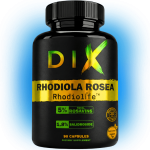
If you want to compare with a product, look at salidroside. The study provided 12 mg a day. Our Rhodiola Rosea contains 4.5 mg per 250 mg capsule of extract, with 5% rosavins, at one capsule a day. That’s almost three times less salidroside, so we’re not promising you the same results.
Additional Benefits and Therapeutic Applications
Emotional balance and moodRhodiola acts directly on the neurotransmitters related to mood by supporting the nervous system in the face of emotional stress.BALANCEMood regulation and emotional well-beingClinical studies show that this adaptogenic plant has significant effects on stress and its manifestations such as mental fatigue and emotional disorders. Rhodiola helps harmonize cortisol levels produced by the adrenal glands, which is an important mechanism for regulating mood.Mechanism: Cortisol harmonization + antioxidant protection of the nervous systemIts antioxidant properties also help protect the nervous system against damage caused by free radicals, thus preserving emotional balance. Rhodiola rosea explains its positive action on mood, as confirmed by several comparative placebo studies.Improvement of sleep qualityAs an adaptogenic plant, rhodiola allows the body to better manage stress in all its forms, whether physical, emotional, or mental.SLEEPRestorative sleep and optimal recoveryWhen we better resist the tensions accumulated during the day, our body finds itself in more favorable conditions to access restorative sleep.Optimal timing: Take in the morning or early in the day (avoid in the evening to prevent any stimulating effect)To maximize the benefits on sleep, favor a highly titrated extract in salidroside and rosavin, the active principles responsible for adaptogenic effects. Results on sleep quality generally manifest in a few days, but regular use further optimizes long-term effects.Effects on the cardiovascular systemRhodiola helps maintain optimal cardiovascular health by acting indirectly on blood circulation.CARDIOCardiovascular protection and blood pressureProlonged exposure to stress can lead to various cardiac complications that this adaptogenic plant helps prevent. Research shows that a high level of cortisol maintained over time can cause several physiological problems, including an increase in blood pressure that negatively affects the cardiovascular system.Placebo studies: Significant reduction in cortisol response during stressful situationsThese results suggest that rhodiola rosea can help naturally moderate cortisol production in the body, thus helping to maintain balanced blood pressure and protect the cardiovascular system from the deleterious effects of chronic stress.
😊
😴
❤️
Why Choose Our Rhodiola Supplement?
If you’re looking for a Rhodiola rosea supplement that ticks all the boxes – effectiveness, reliability, careful formulation – you’re in the right place. Our product was designed for one thing: to optimize your mental performance, whether in a demanding professional context, during an intense gym session, or in a phase where the pressure is mounting.
What will you find in each capsule? A standardized extract, guaranteed in active principles. In other words: no guesswork, no variation between batches, you have the same potency with each dose. And for an adaptogen, that’s crucial.
This supplement wasn’t just formulated behind a desk. It was born from my own need – from those moments when I was juggling workouts, content creation, rush periods, and wanted to stay performant without sacrificing my mental clarity. I wanted a product that would help me hold on without scattering. Our Rhodiola is that support: the one that stabilizes, keeps you lucid, responsive, and present.
It is aimed at anyone looking for a real solution to manage stress while maximizing their cognitive efficiency. Whether you’re an athlete, entrepreneur, student, or simply seeking a more aligned daily life, you’ll find in this supplement a solid and natural ally.
And beyond the product itself, what I’m offering you is a sustainable wellness ritual. It’s not a miracle pill; it’s another building block in a coherent routine, oriented towards performance and health.
Shall we continue? Here are more products from our range designed to support your overall well-being.
Scientific Publications
“Stress management and the role of Rhodiola rosea: a review” (This study examines the effects of Rhodiola rosea on stress management, burnout, and associated symptoms) DOI: 10.1080/13651501.2017.1417442
“Effects of Rhodiola rosea on Physical and Decision-Making Performance in Football Players” (Dou et al., Nutrients, 2026: 24 footballers, four weeks, double-blind against placebo) DOI: 10.3390/nu18050724
“The effect of Rhodiola rosea supplementation on endurance performance and related biomarkers” (Wang et al., Frontiers in Nutrition, 2025: systematic review and meta-analysis of 26 trials) DOI: 10.3389/fnut.2025.1645346
Section on footballers added on 4 November 2026, based on Cyril Certain’s analysis and the full text of the study. The 90 m, 170 ms and 700 m figures are the rhodiola group’s gains against its own starting point, not gaps with placebo. This content is for information only and does not replace advice from a healthcare professional.