SHIPPING FEES
Free from 70,00 € (still 70,00 €)
from
5,90 €


Shilajit, just a few years ago, was almost unheard of in the West. Yet, in other parts of the world, it has been used for its benefits for a very long time.
Since it remains relatively unknown, we’ve decided to answer 10 key questions: its origin in the Himalayas, its impact on testosterone, recommended dosages, and potential side effects. The goal is simple: to guide you towards informed choices based on reliable data.
So, imagine this. You know how oil is formed: organic matter transforms over centuries under pressure (yes, ENTIRE CENTURIES! Even more) to become the fuel of our civilization. Well, for shilajit, the idea of slowness is the same, except the composition is entirely different. Here, we’re not just talking about organic matter. It’s a blend of ancient plants and the rock itself, combined in a long natural process.
Over time, this plant and mineral duo is compacted, reshaped, and decomposed by pressure, heat, and the action of microorganisms. Nothing happens quickly. Everything evolves in small steps, year after year, until it creates something that exists nowhere else.
And after this very long process, you get a dark, sticky resin that eventually seeps out of the rock (as if it took an eternity to find its way out). That’s shilajit: a raw, dense substance naturally concentrated in active compounds, shaped by time and nature. Human oil (yes, it might not sound great, but still).
Oil, you won’t find it in your backyard unless you live right on a region rich in it. Well, for shilajit, it’s exactly the same logic. This resin won’t start flowing from your tap, nor will it magically appear behind your house (even if that would be convenient).
Shilajit only forms in very specific places. Not in plains, not in typical forests, not by the sea. It needs extreme conditions to exist, and these conditions are found only in certain specific mountain ranges.
If these regions can produce quality shilajit, it’s thanks to their altitude, ancient rocks, isolation, and complete absence of pollution. This mix of factors creates exactly the environment this substance needs to form slowly and become so concentrated in benefits.
What makes shilajit so special is the complexity of its composition. Few natural products gather so many different elements in a single substance. We’re talking about organic acids, minerals, plant compounds, and bioactive molecules that are rarely found together elsewhere (that’s what gives it its strength).
Fulvic acid is one of the most prevalent elements in shilajit. It’s a small molecule resulting from the natural decomposition of plant matter. Its tiny structure allows it to easily interact with other substances, which is why it’s often mentioned when describing shilajit.
Fulvic acid is also found in other natural materials, like some very plant-rich soils or ancient peat. But in these sources, the levels remain modest. Shilajit, however, stands out because it concentrates a much higher amount than what is typically found in nature (that’s where the difference lies).
Humic acid is another major component. More massive than fulvic acid, it also comes from the slow transformation of organic matter. Its particularity lies in its ability to bind to various molecules and minerals, a natural property that develops only in very ancient environments.
It’s also found in humus or certain peats, again in limited quantities. Shilajit often contains much more, simply because its formation process is much longer and occurs in conditions that these other materials do not reach. This explains why shilajit displays significantly higher levels of humic acids than most other natural sources.
Shilajit also contains numerous minerals and trace elements. They are not present in massive quantities, but in a form naturally bound to the organic and mineral matter resulting from its long formation process. If you want to know the complete list, we actually have an article dedicated to detailing the 85 minerals identified in shilajit (for those who like to dig deep).
It also includes rarer molecules, like dibenzo-alpha-pyrones, urolithins, and certain chromoproteins. They come directly from the transformation of plant matter and mineral structure and are an integral part of shilajit’s chemical identity.
Regarding physical performance, the available data is still limited. We have some interesting results, but they should be considered as leads rather than definitive certainties.
Animal studies show that shilajit could increase ATP levels, the molecule that provides energy to muscles. There’s also a stimulation of mitochondrial activity, suggesting that shilajit could help cells produce and use energy more efficiently.
On the human side, a few clinical trials indicate positive effects on recovery and better resistance to strength loss after intense effort (interesting results, but still preliminary).
That said, caution is needed. Samples are often small, protocols sometimes variable, and there’s still a lack of large-scale studies. Today, research is progressing, but it doesn’t yet allow for definitive conclusions regarding physical performance.
Shilajit is regularly associated with testosterone, and there are indeed some interesting studies on the subject. They are not numerous, but the observed results are worth mentioning.
In a clinical trial, men aged 45 to 55 saw their testosterone levels increase by about 20% after 90 days of daily intake. Another study reports a similar increase of around 22%, again in a male population with healthy hormonal levels.
There are also encouraging results regarding fertility. Some observations show an improvement in the total number of sperm as well as their motility. Again, these are studies on adults with normal hormonal function.
It is important to keep in mind that these studies are primarily aimed at middle-aged men without any particular pathology. People suffering from hypogonadism, for example, may not respond in the same way, and the effects may

Shilajit does not make you grow taller. No study has shown an impact, direct or indirect, on height or growth hormone. Once adolescence is over, growth plates close, and there is no natural way to increase height (shilajit is no exception).
If this myth exists, it is mainly because shilajit has been used for a long time in traditional medicines and is often associated with vitality or general strengthening. Some people have therefore made the shortcut between “vitality” and “growth,” whereas these are two completely different processes.
Scientifically, things are simple: no data shows an effect on bone growth. However, some studies suggest an influence on hormonal balance, particularly on testosterone in adults, but this has nothing to do with height.
In summary, if you are looking for a product to grow taller, shilajit will have no impact. However, it can be useful for other aspects of adult health (as detailed in other sections), but physical growth is not one of the things it can affect.
The quality of shilajit primarily depends on its original environment. High-altitude areas, far from pollution and industrial activity, offer the best conditions for formation. Without this isolation and altitude, it is impossible to obtain a naturally clean resin.
Extraction is usually done by hand, directly from rock crevices. Once harvested, raw shilajit must be purified. Serious methods use low-temperature filtration, which removes impurities without altering natural components.
Then come laboratory tests. They are essential: heavy metals, contaminants, bacteria, everything must be checked to ensure the product is clean and compliant. Certifications (such as GMP standards or analyses conducted in independent laboratories) provide this transparency.
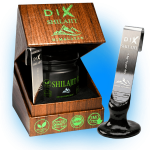
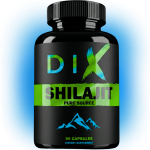
At DIX, we use a Himalayan source located at high altitude, far from any pollution. We apply a controlled purification process, and each batch is tested in an independent laboratory before packaging. The goal is simple: to ensure a stable, clean, and compliant shilajit that meets our quality criteria.

Initially, some people may experience mild digestive issues: diarrhea, nausea, or abdominal discomfort. Generally nothing to worry about, and it often disappears after a few days. Starting with a small amount helps avoid this type of reaction.
The real caution concerns mainly untested products. Poorly purified shilajit may contain heavy metals or microbiological contaminants. This is why laboratory analyses are not an option but a necessity.
There are also some contraindications. Shilajit, naturally rich in iron, is not recommended for people with iron overload or at risk of hemochromatosis. It is also not advised for those with kidney or liver problems, during pregnancy, breastfeeding, or in cases of phenylketonuria, as it contains phenylalanine.
If persistent symptoms occur — unusual headaches, prolonged digestive issues, or allergic reactions — it is best to consult a healthcare professional. The principle is simple: if something does not seem normal, it is better to seek advice rather than insist.
To start, the simplest dose is the equivalent of a small grain of rice, once a day. This allows you to see how your body reacts without pushing too hard from the start.
If all goes well, you can gradually increase to a portion the size of a small pea, once or twice a day. The idea is to proceed slowly, adjusting according to your comfort.
The ideal timing depends on what you are looking for. In the morning, it pairs well with a more active start to the day. Before training, it easily fits into a sports routine. And in the evening after a meal, it is often used for recovery purposes. Just avoid taking it right before sleeping if you are sensitive to stimulating products.
What to avoid: do not start too strong, do not multiply doses without reason, and do not exceed high doses “to see.” Shilajit works best when you remain regular and reasonable.