SHIPPING FEES
Free from 70,00 € (still 70,00 €)
from
5,90 €


Apigenin, a flavonoid naturally found in chamomile flowers, could have particularly interesting effects for heart health.
This molecule, at the heart of recent studies published in Nutrients in 2023, demonstrates significant beneficial effects on cardiovascular health.
Apigenin is a natural flavonoid found in many everyday fruits and vegetables. This powerful compound, which belongs to the polyphenol family, is primarily found in parsley, celery, chamomile, and citrus fruits.
If you enjoy chamomile tea for its soothing properties, you’re already consuming apigenin without knowing it! We have an entire article introducing apigenin on our site, and another article discussing the benefits of apigenin for sleep, feel free to read it!
Apigenin acts as a natural shield for our cardiovascular system thanks to its remarkable antioxidant and anti-inflammatory properties.
This molecule works on multiple levels to protect our heart cells, notably by reducing oxidative stress and regulating various cellular mechanisms essential for our heart’s health.
Apigenin thus plays the role of a fighter against free radicals, those unstable molecules that can damage our heart cells. Its antioxidant action is particularly effective: it boosts our natural defenses by increasing the activity of protective enzymes like SOD (superoxide dismutase) and catalase, which are somewhat like our internal cellular “cleaners.”
But that’s not all! The anti-inflammatory action of apigenin is equally impressive. It works by reducing the production of inflammatory molecules (such as TNF-α, IL-6, and IL-1β) which, when present in excess, can contribute to the development of heart diseases. It’s a bit like extinguishing a smoldering fire in our arteries.
The protection of heart cells by apigenin also involves more sophisticated mechanisms: it activates cellular signaling pathways (such as the Nrf2 pathway) that enhance the resilience of our heart cells against assaults.
It’s fascinating to see how a natural molecule can have such precise and targeted effects! But what are the scientific proofs of these beneficial effects? Let’s examine the research that has been conducted…

Numerous scientific studies demonstrate the effectiveness of apigenin in cardiovascular protection. The research, conducted mainly on animal and cellular models, reveals promising results in the prevention and treatment of various heart diseases.
A study conducted by Wong and colleagues in 2018 on hamsters fed a high-cholesterol diet showed that apigenin (60 and 300 ppm) significantly reduced the formation of atheromatous plaques. The researchers observed a decrease in total cholesterol and triglycerides in the blood, as well as an improvement in cholesterol elimination. Even more impressive, Clayton’s team in 2021 demonstrated that oral administration of apigenin (50 mg/kg) in aged mice restored endothelial function and reduced arterial stiffness.
Quan and his team’s work evaluated the effect of an apigenin derivative on rats subjected to cardiac ischemia-reperfusion (simulation of a heart attack). Administration of apigenin (50 and 100 mg/kg) significantly reduced the size of the infarcted area and decreased markers of cardiac injury. At “Dix,” we find it particularly interesting that the researchers identified the precise mechanism: inhibition of the NF-κB pathway, involved in inflammation.
In a fascinating study published in 2017, Liu and colleagues investigated the effect of apigenin (100 mg/kg) in mice with diabetic cardiomyopathy. The results are compelling: a reduction in cardiac hypertrophy and an improvement in heart function. The study also highlighted an increase in antioxidant enzyme activity in cardiac tissue, partially explaining these beneficial effects.
It should be noted that most available studies are preclinical, meaning they are conducted on animals or cells in the lab. Clinical studies in humans would be necessary to confirm these promising results, but the current data is already very encouraging.
Many of you ask us about the concrete effects of apigenin on cardiovascular health. Here are the answers to the most frequently asked questions, based on the latest available scientific data.
Yes, apigenin can indeed reduce heart rate, but in a moderate and gradual way. Another study, this time conducted by Gao and his team, demonstrated that administration of apigenin (20 μg/h for 28 days) in hypertensive rats led to a significant decrease in heart rate, without notable side effects. So yes, you’re not a rat, but it could be particularly interesting if the same effect occurred in humans for mild tachycardia!
Research shows very encouraging results regarding the effect of apigenin on blood pressure. In a study on hypertensive rats (yes, them again), apigenin not only reduced mean blood pressure but also improved overall heart function. It’s particularly interesting that these effects are linked to improved blood vessel health (notably through better production of nitric oxide, a natural vasodilator).
Caution is advised as apigenin can interact with certain cardiovascular medications. It can influence the action of anticoagulants and some antihypertensives by altering their metabolism. (If you are taking medications, always consult your doctor before starting apigenin supplementation).
Scientific studies generally use doses between 50 and 100 mg/kg in animals, but the optimal dose in humans is not yet clearly established.
Although apigenin is generally considered safe at dietary doses, some minor precautions are necessary. Pregnant or breastfeeding women should avoid apigenin supplements. Similarly, if you have a history of bleeding disorders, consult your doctor before any supplementation.
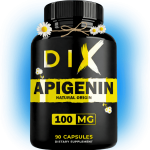
Scientific studies are clear: apigenin plays a crucial role in protecting our heart. That’s why we offer you a natural and effective solution with our APIGENINE.
Quality at the service of your heart
Our product stands out for:
Unlike many products on the market that use synthetic apigenin or whole plant extracts, our apigenin is extracted exclusively from chamomile flowers, ensuring optimal bioavailability and targeted action on your cardiovascular health.