SHIPPING FEES
Free from 70,00 € (still 70,00 €)
from
5,90 €


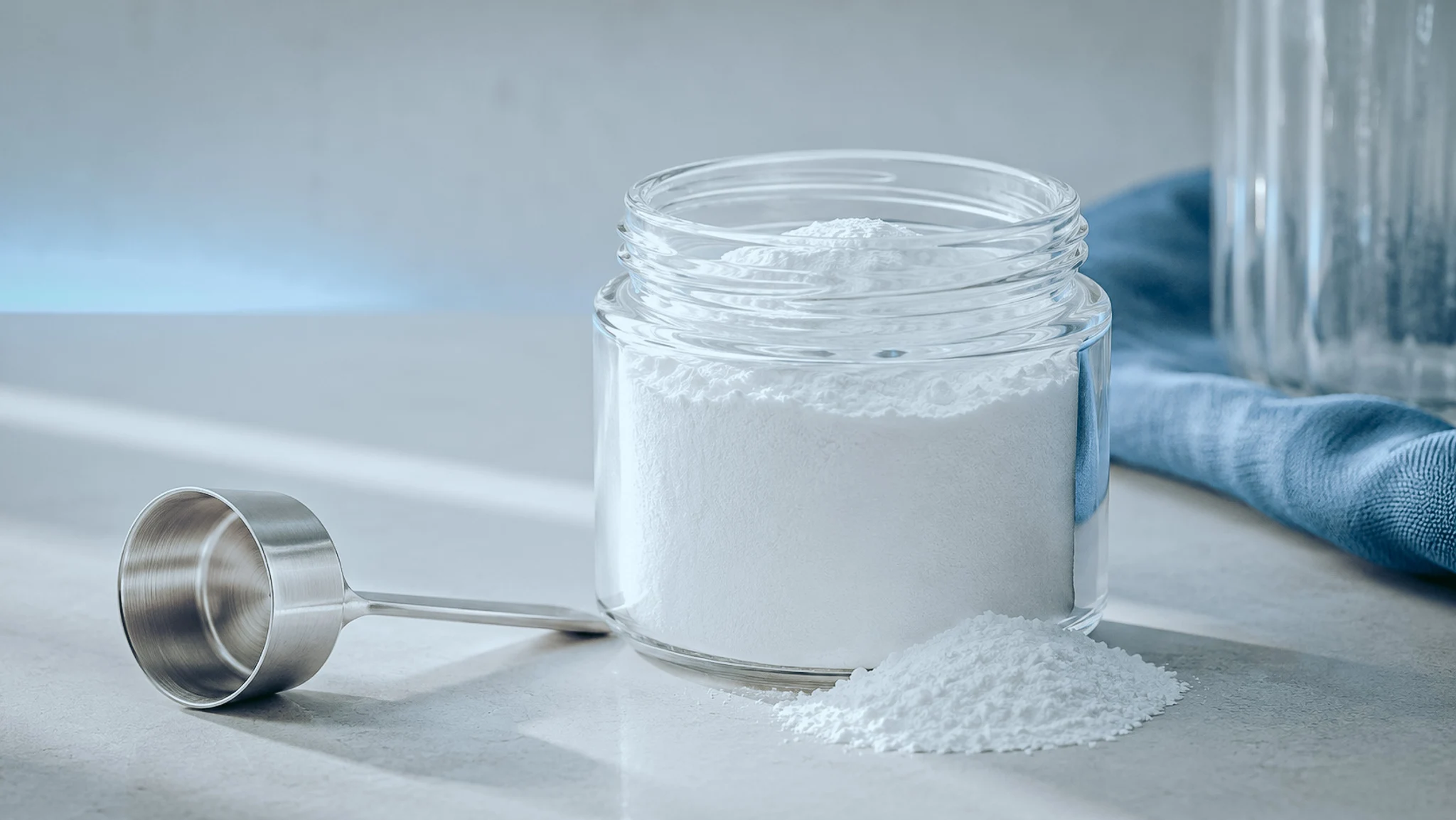
I’ve seen creatine in just about every form: monohydrate, hydrochloride, ethyl ester, buffered, liquid, capsules, flavoured powder. Most of these variants were just an excuse for a higher price. I’ll be straight with you: creatine is probably the most researched supplement in the world, the one whose effectiveness is least in doubt, and that’s exactly why it deserves better than a random purchase based on a flashy label. Here’s the guide I wish I’d read before getting serious about it.

Creatine is a molecule your body already makes on its own, from three amino acids (arginine, glycine and methionine). You produce about one gram a day in your liver and kidneys, and you get about as much from your diet, especially red meat and fish. In total, your body stores about 120 to 140 grams of creatine, the vast majority of it in your muscles, with a small amount in your brain.
Its role comes down to a simple image: creatine is a backup battery for short, intense efforts. When you lift something heavy or sprint, your muscles burn through their immediate fuel, ATP, in a few seconds. Creatine stored as phosphocreatine then recharges that ATP almost instantly, giving you one more rep, one more sprint, one more effort. That’s the whole principle, and it’s also why you notice it more on explosive efforts than in long endurance.

Creatine has a rare privilege in the supplement world: an authorised health claim, assessed by the European Food Safety Authority (EFSA) and also listed on Great Britain’s own nutrition and health claims register. The wording: “Creatine increases physical performance in successive bursts of short-term, high intensity exercise”, for an intake of 3 grams a day. This isn’t home-made marketing, it’s a claim validated after a review of the evidence. Few supplements can say the same.
Beyond this official claim, research documents other benefits, with varying levels of evidence:
For a closer look at each of these, see our article on the positive effects of creatine.
In September 2026, the Journal of the International Society of Sports Nutrition published a meta-analysis of 63 trials and 1,489 people aged 18 to 75 (Wang et al.). All were doing resistance training, for 4 to 12 weeks, with or without creatine monohydrate. Cyril Certain went through it and gives it 6.5 out of 10.
| What was measured | Effect (Hedges’ g) | What it means |
|---|---|---|
| Upper body strength | 0.54 | Medium effect: the average person on creatine progresses more than about 70% of those not taking it |
| Lower body strength | 0.55 | Same order of magnitude |
| Lean mass | 0.30 | Small effect, about 62%, some of it water stored in the muscle |
| Fat mass | -0.10 | No significant difference: neither fat loss nor fat gain |
On dosage, more than 5 g a day did no better than 5 g or less, and a loading phase didn’t change the outcome, which fits the protocol described below.
Two subgroups deserve a closer look, because a quick read can mislead.
There are limits to keep in mind. The authors rate the certainty of the evidence on strength as low. There’s also publication bias: small studies with no result are missing, and once that bias is corrected, the effect on strength drops to around 0.36, more like 64% than 70%. It’s still a real effect, just less spectacular than the raw figure, and the trials don’t go beyond 12 weeks.
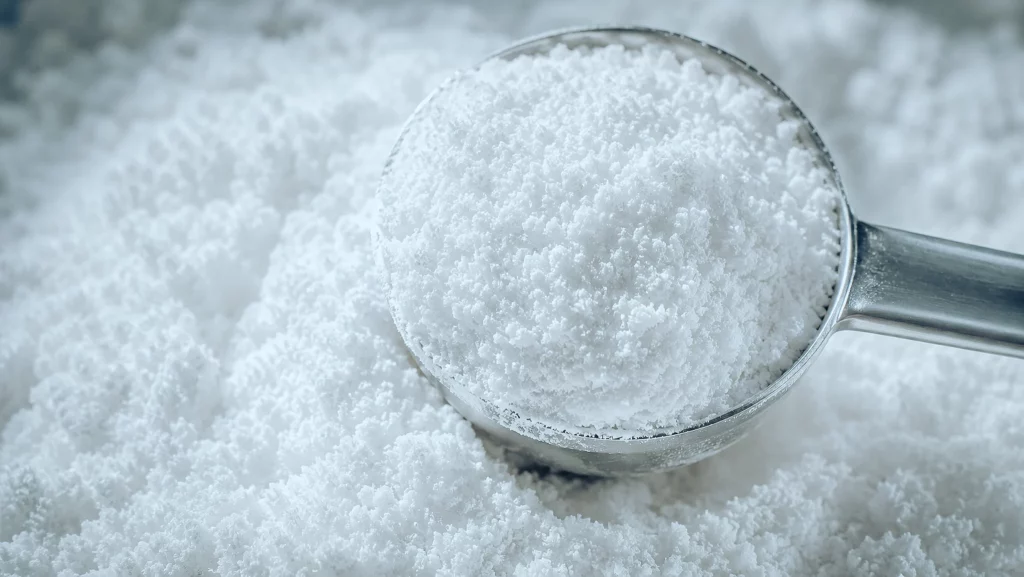
Here’s the part marketing loves to complicate, while the science is clear. There are about a dozen forms of creatine on the market, often sold at a higher price with the promise of better absorption or less water retention. The problem is that when these exotic forms are put up against good old monohydrate in serious studies, none does better. Monohydrate remains the most studied, most effective and cheapest form per gram of creatine you can actually use.
In other words, paying more for a “new generation” form often means paying for marketing. The real question isn’t which form to choose, but which quality of monohydrate. And contrary to popular belief, not all creatine monohydrate is equal.
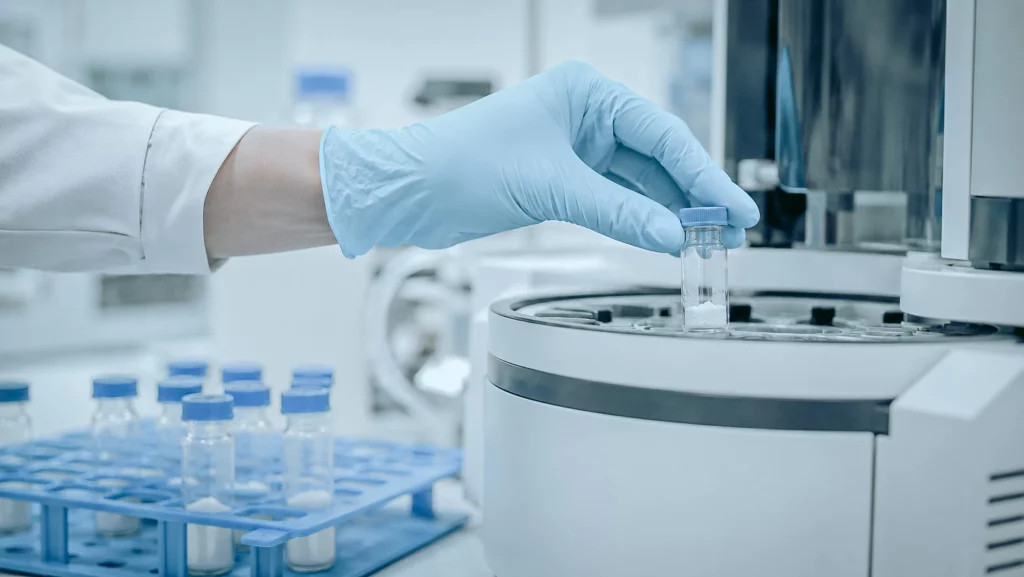
Making creatine can leave behind unwanted by-products, mainly dicyandiamide (DCD) and dihydrotriazine (DHT). These aren’t just lab technicalities: they’re impurities that regulators monitor. EFSA recommends that a creatine product stays under 50 mg/kg of DCD and 3 mg/kg of DHT. A poorly controlled process, often the cheapest one, can go over these thresholds.
That’s exactly where a generic creatine differs from our Creapure Creatine. Creapure is a monohydrate made in Germany, with purity checked by chromatography and by-product levels well below regulatory limits. The manufacturer has analysed creatines from around the world, and reports its own as consistently the purest. It’s also on the Cologne List, the anti-doping reference for tested athletes.
The good news is that the protocol is simple. Three to five grams of creatine monohydrate a day, every day, is enough. One serving of our creatine provides 3.4 grams, which is exactly what an adult needs each day.
The famous loading phase (20 grams a day for a week) isn’t mandatory. It simply saturates your muscles faster, in one week instead of three or four. But it doesn’t change the final result, and it raises the risk of digestive discomfort. My position, which the literature broadly supports, is that a regular daily dose is simpler, better tolerated and just as effective in the long run. You don’t need to “cycle” either: creatine is taken continuously.
The loading phase saturates the muscles faster, but it doesn't go higher. A regular intake reaches exactly the same level, just a few weeks later.
Kinetic diagram of the principle, not individual measurements. Both paths converge to the same plateau: the loading phase only saves a few weeks, at the cost of an increased risk of digestive discomfort.
To adjust the dose to your body weight, we’ve built a calculator: what dose of creatine per day?
This is probably the most frequently asked question, fed by two persistent fears: kidneys and hair. Let’s be clear, in one sentence: in a healthy person, creatine is one of the best-tolerated supplements and one of the most studied for safety, with decades of hindsight.
Concerns are also raised about the heart, or a link to cancer and the prostate. Here again, no serious data supports these fears in healthy people.

You already eat some before you ever take a supplement. Creatine is mainly found in red meat and fish (herring, salmon, tuna). A steak provides roughly one to two grams of creatine per half-kilo, which shows the problem: getting the useful 3 to 5 grams a day from food alone would take an unrealistic amount of meat every day. That’s even more true for vegetarians and vegans, whose diet provides almost no creatine, which explains their lower muscle stores. A supplement doesn’t replace a good diet, it simply fills, with less effort, a gap that’s hard to fill from your plate.

The short answer: far more people than you might think. Creatine isn’t just for bodybuilders.
If you only remember a few things, make it these. Choose monohydrate, not a more expensive exotic form. Check purity and origin rather than chasing the lowest price per kilo. Be wary of blends that bury creatine in a long list of ingredients with invisible doses, a common practice that often hides underdosing. A good creatine is a simple, pure ingredient, properly dosed and open about where it comes from.
To remember. The right habit: pure monohydrate, a traceable origin, a clear dose of 3 to 5 g a day. The rest is often marketing.
That’s exactly the specification we set for our creatine: German Creapure, pure, micronised so it mixes easily, dosed at 3.4 grams per serving, with no unnecessary additives. I can see you thinking “product placement”, so let’s be upfront about it: after explaining what matters, I’m showing you what ticks the boxes.
Absolute Purity (Creapure®): 100% pure creatine monohydrate made in Germany. Certified free of toxic residues (DCD/DHT) and micronized…
Out of stock
Creatine is a rare case: a supplement whose effectiveness and safety are solidly established, with an official performance claim to boot. The real trap isn’t whether it works, it’s paying too much for a useless form or choosing a monohydrate of doubtful quality. Stick to pure monohydrate, take 3 to 5 grams a day without overcomplicating things, and check the origin. Fundamentals first, always: training, sleep and nutrition do most of the work. Creatine adds that small margin which, over time, really counts.
Creatine: your most frequently asked questions
You may gain a kilo or two in the first few weeks, but it’s water drawn into the muscles, not fat. It doesn’t cause swelling under the skin.
No, it’s not mandatory. A loading phase saturates the muscles faster, but a daily dose of 3 to 5 grams gets you to the same place after three to four weeks, with less digestive discomfort.
No, not in a healthy person. It slightly raises blood creatinine, but that’s a mechanical effect of supplementing, not a sign of kidney damage. People with kidney disease should talk to their doctor.
No. It’s a natural compound, legal and not banned by the World Anti-Doping Agency. Creapure creatine is even on the Cologne List of products tested for athletes subject to doping controls.
The first effects on strength and muscle volume generally appear after one to three weeks of regular use, because it takes time for the muscles to become saturated with creatine.
Creatine monohydrate, without hesitation. It’s the most studied, most effective and least expensive form. More expensive forms (hydrochloride, ethyl ester) offer no demonstrated advantage.
Guide updated after a review of the 2026 meta-analysis. This content is for information only and does not replace advice from a healthcare professional.

You must be logged in to leave a comment.