SHIPPING FEES
Free from 70,00 € (still 70,00 €)
from
5,90 €


Let’s deal right away with the question everyone asks: “what’s the best omega 3 supplement?”. It’s probably the most searched question on the subject, and one of the least useful. Type it into a search engine and you’ll find brand rankings, “top 8” lists and expert-approved picks. The problem is that these rankings contradict each other from one site to the next, they go out of date in a few months, and they never teach you to judge a tub for yourself.
The honest question, the one that really helps you, isn’t “which brand?” but “which criteria?”. Because the best omega 3 isn’t a name on a label: it’s a specification. An oil that meets a precise list of conditions, whoever happens to sell it. Here are the seven criteria that really matter, from the most overlooked to the most technical. Once you know them, nobody needs to choose for you.
Let’s be clear from the start: you won’t find a brand ranking with a crowned winner here. First, because naming a “number one” makes no sense when the right product depends on your needs and what you already eat. Second, because we’re an omega 3 brand ourselves, and a manufacturer crowning itself best in class isn’t worth much.
What is worth something is objective criteria you can check on any tub, even if you never buy from us. We’ve put them in a deliberate order: freshness first, because it’s the most decisive criterion and, oddly enough, the one nearly every guide reduces to a “keep in the fridge” note at the bottom of the page.
Let’s start with what most comparisons leave until last, even though it’s the first safety filter. Chemically, omega 3 is a very fragile fat. The double bonds that make EPA and DHA so useful to your cells are also what makes them go rancid when exposed to air, light, heat and time. An oxidised oil loses some of its active EPA and DHA and brings in compounds you could do without. The real risk with an omega 3 isn’t the omega 3 itself, it’s oxidised omega 3.
For more on this: omega 3 side effects, real risks and exaggerated fears.
Oxidation is measured with an indicator called TOTOX (total oxidation value). The lower it is, the fresher and more stable the oil. The industry standard allows a TOTOX of up to 26, and a fresh, high-quality oil sits well below that.
This number adds up two stages. The oil first forms peroxides, which have no smell or taste: that’s primary oxidation, measured by the peroxide value. Those peroxides then break down into aldehydes, the ones that smell rancid: that’s secondary oxidation, measured by the anisidine value. TOTOX equals twice the peroxide value plus the anisidine value. GOED, the industry’s trade body, sets its maximums at 5 meq/kg for peroxide, 20 for anisidine and 26 for TOTOX. [1]
But here’s the point few brands own up to. A TOTOX of “4” or “5” on a website is measured at one precise moment: when the oil leaves purification and goes into the barrel, so at its freshest. That number isn’t a lifetime guarantee, because TOTOX climbs afterwards with time, heat and UV. Showing a frozen value without ever saying how the oil has been stored since isn’t transparency. A low TOTOX only means something if the cold chain has been kept between the barrel and you.
That’s exactly the DIX approach, and it’s what lets us talk about low TOTOX honestly: our omega 3 is kept in a cold room at around 0 to 4°C, close to freezing, and restocked in small, regular batches so that no stock sits around. We even extend this to resellers: a shop that stocks our omega 3 must have a fridge to keep it cool. Freshness isn’t an afterthought on a product page, it’s the starting point.
The frozen number trap
A low TOTOX shown on a website says nothing about the state of the oil today, in the bottle in your hand. That number is measured at bottling, then rises if the oil isn’t kept cold. The right question isn’t “what was the initial TOTOX?” but “has this freshness been maintained until my order?”.
One last useful habit for an oil you already own: oxidation shows up in taste, smell and colour. The more oxidised an oil is, the more it turns yellow, then orange, then brown. A fish oil that smells strong and has darkened is past it. This habit has two limits: peroxides have no smell, and a flavouring can cover the rest, as we’ll see under criterion 6.

This is the most common label trap. “1000 mg of fish oil” doesn’t mean “1000 mg of EPA and DHA”. Fish oil is the container. EPA and DHA are the two active fatty acids that actually deliver the benefits. Between a low-strength crude oil and a purified, concentrated oil, the active content for the same stated weight can differ enormously.
So the only number that counts is the EPA and DHA content per capsule, not the milligrams of total oil. A diluted product forces you to swallow many more capsules to reach the same active dose. As a guide, EFSA puts the heart benefit at 250 mg of EPA and DHA a day, and that’s the threshold the authorised health claim uses. It’s up to you to check how many capsules that takes with each product.
The label habit to get into
Never read “1000 mg of fish oil” as an active dose. Find the “EPA” line and the “DHA” line, add them up, and scale the total to the number of capsules you’d take. Two products at the same price can hide a two-fold gap in the dose that actually matters.
This criterion is invisible to the naked eye, yet decisive for what your body really absorbs. During purification, the oil is first converted into an ethyl ester. It’s a practical, cheap form to produce, but less well absorbed: 20 to 50% less, depending on the study. In the most cited trial, over two weeks, the reconstituted triglyceride form raised blood EPA and DHA 1.7 times more than the ethyl ester (Dyerberg, 2010). And if you take your capsules on an empty stomach or with a light meal, the gap is even wider (Lawson, 1988). An extra step can turn the oil back into a triglyceride (often written rTG), the form you absorb naturally when you eat fish.
The form isn’t always stated in black and white on the box. “Triglycerides” or “rTG” are good signs. If neither appears on a cheap product, it’s often an ethyl ester. Our omega 3 is in triglyceride form, precisely so as not to lose along the way what we’ve gained in concentration and freshness.
Where the oil comes from matters as much as what’s done with it. The best oils come from small, wild oily fish: sardines, mackerel, anchovies. These species are short-lived and feed on plankton, right at the bottom of the food chain. As a result, they build up far fewer heavy metals and microplastics than big predatory fish, which concentrate the contaminants of everything they eat.
Two concrete things to look for: the species (small fish rather than a vague “fish oil”) and a sustainable fishing mention through a recognised certification. This isn’t only about the environment: a managed fishery and a clean raw material from the start also mean an oil that needs less processing to be safe. That’s the base we chose for our omega 3, a marine oil from small fish, certified for responsible fishing.
A clean source is a good start, but it doesn’t replace proof. A serious omega 3 is tested on every batch and publishes its certificates. The key phrase is batch by batch. A single analysis shown once and for all says nothing about the bottle you buy two years later.
What these tests check: heavy metals, PCBs and other pollutants, which must stay below regulatory limits. Be wary of phrases like “free from heavy metals”: a contaminant is never at zero, and the only honest answer is a number. Ours are online on the product page, batch by batch:
Back to enemy number one, oxidation, but this time on the packaging side. A bottle of oil is the worst option for freshness: every time you open it, oxygen comes into direct contact with all the remaining oil, and oxidation picks up again. A softgel, on the other hand, seals each dose off from air and light until the moment you swallow it. At the same active dose, that’s a real advantage.
Two details show how seriously a product takes its packaging:
A quality softgel doesn’t need flavouring, because it simply has no taste. And while we’re here, one myth to correct: a fishy burp after taking it doesn’t necessarily mean the oil is oxidised. More often than not, it was just taken on an empty stomach or at the very end of a meal.
A glass bottle, pure oil, a hint of lemon: everything about it says premium. Once opened, though, it’s the most exposed format of all, and Cyril Certain explains why in this video.
An omega 3 oil has four enemies, and an open bottle exposes it to all of them. Oxygen gets in with every opening, and the lower the level drops, the more air sits above the oil: the last spoonful has been breathing for weeks. Light sets off the chain reaction, and amber glass limits this without stopping it, where an opaque pill bottle blocks it. Heat speeds everything up: according to GOED, every extra 10°C makes oxidation two to three times faster. [2] And time works against you, because a bottle takes weeks to finish while a capsule stays sealed until you swallow it.
This reasoning has been tested on products from the shelf. In a study published in 2023, Turkish researchers followed nine of the best-selling omega 3 products in pharmacies in their country: three syrups, three capsules and three chewable forms, with two batches per product. The products were opened and kept at room temperature, away from light, and the recommended dose was taken out each day, as a consumer would. [3] The GOED peroxide limit is 5 meq/kg, and all the syrups started below it:
These syrups were in amber glass and stored in the dark, at around 25°C. So neither light nor high heat explains the gap, which the authors put down to air exposure. All of them crossed the limit within 14 to 21 days.
That doesn’t make capsules invulnerable. Five batches out of six ended above 5, two of them from the moment they were opened, which brings us back to criterion 1: freshness is also decided before you buy. But their value barely moved during the test. The study covers a few products on the Turkish market and doesn’t describe every bottle sold in the UK, but the gap between formats is clear.
These figures measure the state of the oil, not an effect on health, and the human data remains thin. In a Norwegian trial, 54 healthy volunteers took a fresh oil, a deliberately oxidised oil with the same EPA and DHA, or sunflower oil for seven weeks. Only the fresh oil lowered IDL and LDL particles [4], but the oxidised oil didn’t raise markers of oxidative stress. [5] So nobody can claim an oxidised oil will make you ill within a few weeks. It mainly seems to lose part of what you paid for.
Pure fish oil tastes of fish. To make it drinkable off a spoon, it gets flavoured with lemon, orange or red berries, and the pleasant taste becomes a selling point. Yet your nose and tongue are the only oxidation detectors you have at home, and the flavouring covers the very signal that should warn you.
The lab doesn’t necessarily see any more clearly. Some flavourings also contain aldehydes, like the citral in lemon, which skew the anisidine value. So GOED applies neither its anisidine limit nor its TOTOX limit to flavoured oils. [1] In the 2023 study, the lemon syrup that hit the peroxide peak is the very one whose TOTOX couldn’t be calculated. [3] Peroxide can still be measured, and it isn’t reassuring: out of 72 omega 3 products sold in the US, 65% of flavoured products were over the limit, against 32% of unflavoured ones. [6]
If you still prefer the oil
Choose it unflavoured, so you keep the taste signal, and in the smallest bottle you can find. Keep it tightly closed in the fridge and finish it quickly. If it smells strong or has darkened, don’t persevere.
That’s why our omega 3 comes in softgels, with no flavouring, in an opaque pill bottle, and stored in a cold room. A quality badge doesn’t settle the question on its own, either: a certificate is issued on one given day.
If you’re looking for a plant oil rich in omega 3 instead (flaxseed, walnut), the question is different: it provides ALA, which your body first has to convert into EPA and DHA. Our list of omega 3 rich foods sorts this out. And on the plate, the NHS advises at least 2 portions of fish a week, including 1 of oily fish, a target most people don’t reach.
The last criterion is a finer one. In short, EPA is more about the heart and regulating inflammation, DHA more about the brain and vision. Both are essential, and betting everything on one while neglecting the other rarely makes sense for most people. A balanced ratio remains the most reasonable choice if you want the full range of benefits.
When it comes to choosing, it fits in one line: steer clear of products that only show a total “omega 3” without ever breaking down the EPA and DHA.
We get asked this a lot, so here’s a straight answer. A pharmacy or a high-street health shop feels reassuring, and fairly so: you get advice and a regulated setting. But let’s be clear, the pharmacy counter is no guarantee of freshness or content in itself. You’ll find omega 3 there, as anywhere else, in ethyl ester form, low in strength and stored at room temperature. None of those three issues is solved just by being on a pharmacy shelf.
In other words, where you buy it settles nothing. The seven criteria above do, whether you shop in a pharmacy, a specialist store or online. Ask exactly the same questions everywhere: what’s the real EPA and DHA content? Which form, triglyceride or ethyl ester? What source? What testing, and how often? And above all, has this oil been kept cold? A good omega 3 can be found in a pharmacy, and so can a bad one, just like anywhere else. The shop doesn’t excuse you from reading the label.
Enough theory, let’s get practical. Here’s our omega 3 compared with market references on what really counts: real EPA and DHA content, form and price per dose. Choose the brand to compare, and the numbers do the talking.
Let’s go through it all in order, so you can judge any tub in thirty seconds.
These criteria apply to every brand, and that’s the whole point. If you’d rather start from a product that already ticks all the boxes, particularly the freshness criterion so few brands take seriously, that’s exactly the specification we set ourselves for our omega 3.
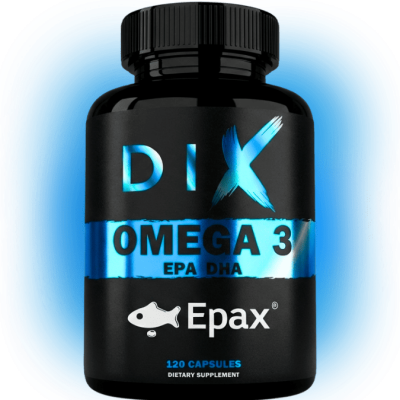
EPAX® Quality: Wild fish oil made in Norway, certified Friend of the Sea. Every batch tested, certificate online:…
In stock
One last word. Choosing your omega 3 well also means knowing what not to fear and what to really watch on the safety side: overdose, interactions, side effects. That’s what our article on omega 3 side effects covers. If you apply these seven criteria, you’re already ahead of the vast majority of buyers.
There’s no universal “best brand”: the best omega 3 is the one that ticks a list of objective criteria. A high real EPA and DHA content (not just mg of oil), a better-absorbed triglyceride form, a small wild fish source, purity proven batch by batch with published certificates, softgel packaging, a balanced EPA/DHA ratio and, above all, freshness protected by a cold chain. Judge the tub on these criteria rather than on a ranking.
Not necessarily. A pharmacy offers advice, but that alone doesn’t guarantee freshness or EPA/DHA content. You’ll find ethyl ester omega 3 there as anywhere else, low in strength and stored at room temperature. Where you buy it doesn’t replace reading the label: apply the same criteria in a pharmacy, a shop or online.
Start with the EPA and DHA content per capsule, not the milligrams of total oil. Check the form (triglyceride rather than ethyl ester), the source (small wild fish, sustainable fishing), a published certificate of analysis for each batch, opaque softgel packaging and a balanced EPA/DHA ratio. The most overlooked criterion is still freshness: a low TOTOX only counts if the oil has been kept cold all the way to you.
Rather than trusting a name, trust a specification. A good brand clearly shows its EPA and DHA content, its triglyceride form, its source, the certificate of analysis for each batch and, above all, how it manages freshness. A brand that stays vague on any of these points, especially cold storage, deserves your suspicion, whatever its price.
The triglyceride form (rTG) is generally better absorbed: it’s the natural form you absorb when you eat fish. Ethyl ester, the form that comes out of purification, is cheaper to produce but 20 to 50% less well absorbed, depending on the study. In the most cited trial, the triglyceride form raised blood EPA and DHA 1.7 times more. At the same content, a triglyceride omega 3 is therefore preferable, and if a cheap product doesn’t mention the form, it’s often an ethyl ester.
Capsules, in the vast majority of cases. A bottle exposes all the oil to air every time you open it, while a capsule stays sealed until you take it. In a 2023 study of shop-bought products opened and used daily, syrups reached 23 to 41 meq/kg of peroxide in 29 days, against a limit of 5, compared with 4.7 to 7.6 for capsules. If you prefer the oil, choose it unflavoured, in a small bottle, and keep it in the fridge.
The section on oil and capsules is based on Cyril Certain’s video, with a review of the sources cited. This content is for information only and does not replace advice from a healthcare professional.
You must be logged in to leave a comment.