
SHIPPING FEES
Free from 70,00 € (still 70,00 €)
from
5,90 €


Type “best tribulus” and you will land on dozens of rankings that contradict each other, often written to sell one particular product. This article takes the problem the other way round: rather than naming a winner for you, it gives you the grid to judge any tribulus for yourself. Once you have these criteria in hand, you will see that most products on the market do not stand up to the comparison.
This is criterion number one, and also the one brands hide best. Almost every extract is standardised to total saponins. That percentage impresses (“80%, 90% saponins!”) but says almost nothing about effectiveness, because saponins are a large family in which a single molecule does most of the work: protodioscin.
An extract can print 90% total saponins and contain very little protodioscin. Conversely, an extract titrated explicitly in protodioscin tells you exactly what you are buying. Simple rule: if the label does not state a protodioscin content, be wary.
The 4-point grid
1. Protodioscin content stated (not just total saponins). 2. Origin and plant part specified (fruit preferably). 3. Purity guarantee (free of mycotoxins and heavy metals). 4. Identifiable manufacturer and traceability. A product that ticks all four boxes can be counted on one hand.
The grid to judge any product. Here is how the comparison falls out.
The products that tick all four boxes can be counted on one hand.
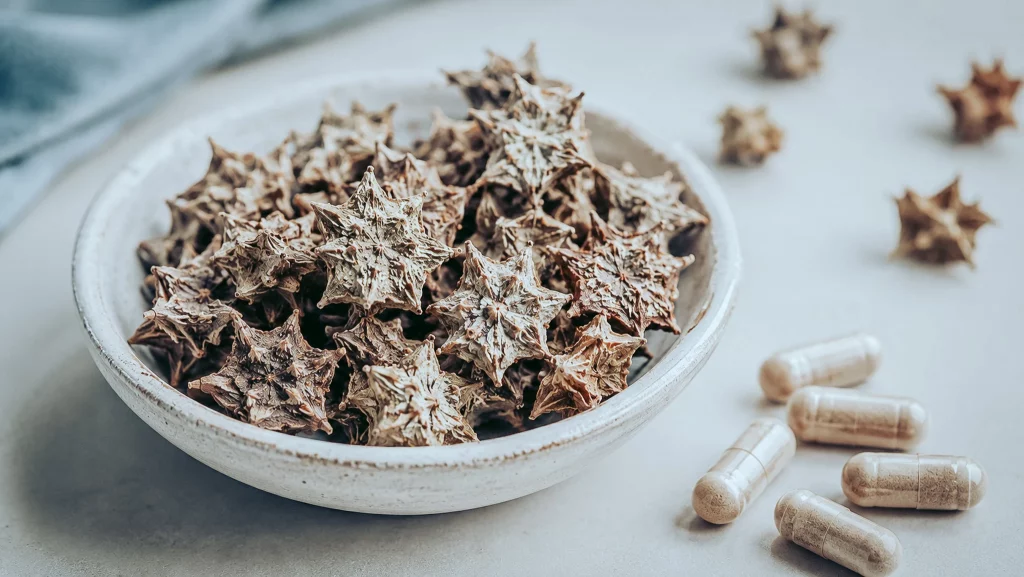
Tribulus does not have the same make-up depending on the part used. The fruit is generally the richest in active saponins, while some cheap powders use the roots or the whole plant, which are less concentrated. Geographical origin also plays a role: climate, sunlight and soil change the content of active compounds. A serious extract states this information, a low-cost product stays vague.
A plant that is poorly grown or poorly stored can concentrate mycotoxins (toxins produced by moulds) or heavy metals. This is exactly where most of the rare reported incidents with tribulus are decided: rarely the plant itself, often a poorly traced product. Demanding a purity certification is your first line of safety. We go into these aspects in our article on the real dangers and side effects of tribulus.
A very cheap tribulus is almost always an extract titrated blind to total saponins, made from a low-cost raw material. You pay little, but you get little protodioscin, meaning little effect. In use, the maths is quickly done: a concentrated, traced extract beats a bulky tub whose real active content is minimal. The true cost is measured by the effective dose, not the sticker price.
The figures that catch your eye on a tub are almost never the ones that matter. Here is how to translate a label before reaching for your card.
The labels that tick all four boxes can be counted on one hand. That is exactly where the choice is made.
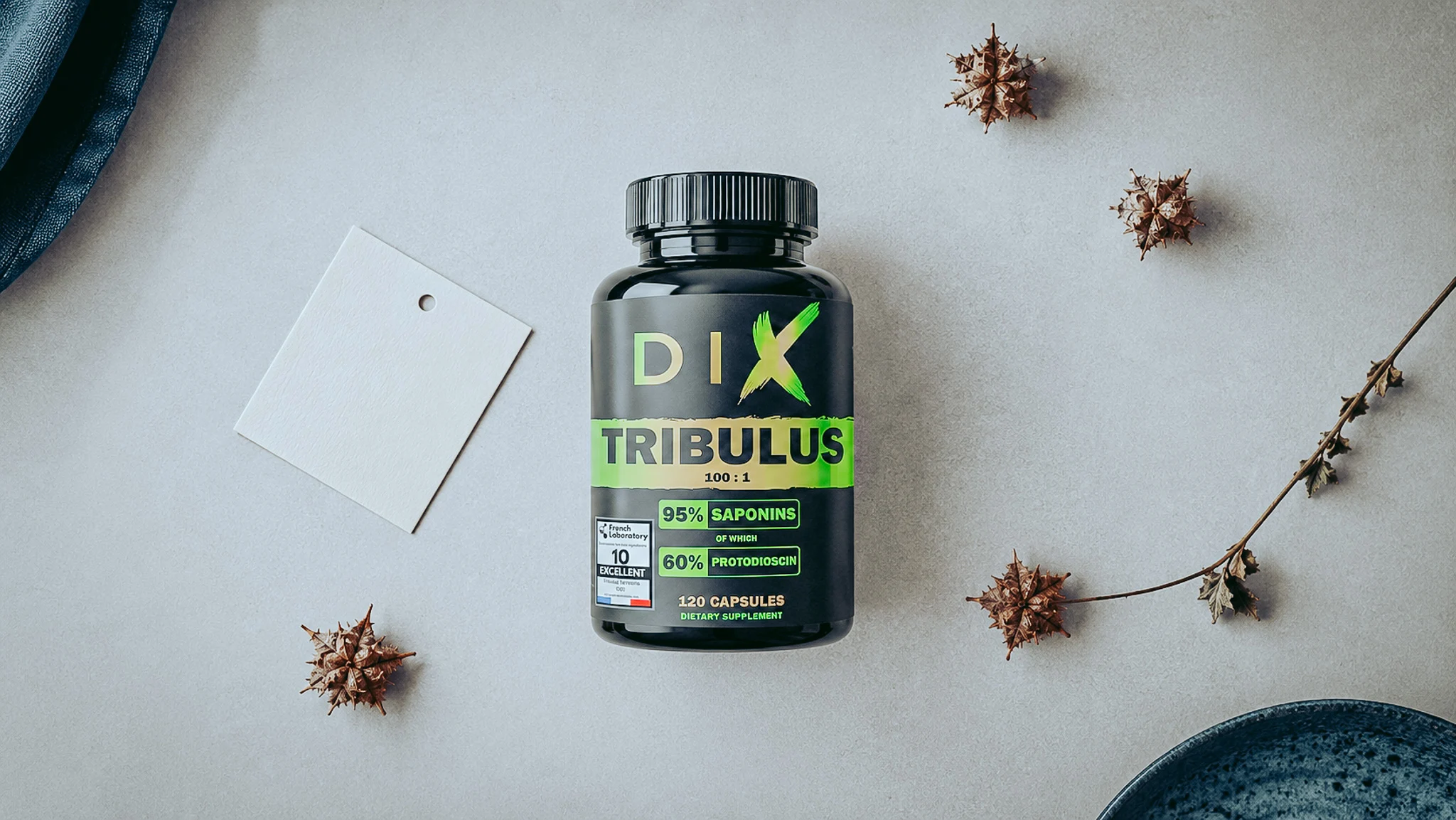
We built our Tribulus terrestris on exactly these criteria, because they are the only ones that count:
We are not trying to be the cheapest, but to be honest about what you actually put into your body. That is also why we refuse to promise a rise in testosterone: we would rather sell a quality extract for the right reasons.
For more detail on this topic: Tribulus, testosterone and bodybuilding: what the science says.
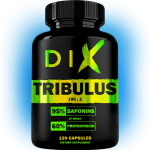
Very high concentration: Purified Tribulus Terrestris extract (Ratio 100:1) with the highest Protodioscin rate in Europe Power &…
In stock
To place this choice within the whole subject, go back to the complete tribulus terrestris guide.
Choosing the right tribulus: your questions
By four criteria: a stated protodioscin content, a specified origin and plant part, a purity guarantee (free of mycotoxins) and an identifiable manufacturer. The total-saponin percentage alone is not enough.
Because total saponins are a large family, but it is mostly protodioscin that is active. An extract can show plenty of saponins and little protodioscin.
Rarely. A low price almost always hides an extract titrated blind, rich in volume but poor in protodioscin, and so ineffective.
A fruit extract at 95% saponins of which 60% protodioscin, 100:1 ratio, certified free of mycotoxins and made in France.
Vous devez etre connecte pour laisser un commentaire.