
SHIPPING FEES
Free from 70,00 € (still 70,00 €)
from
5,90 €


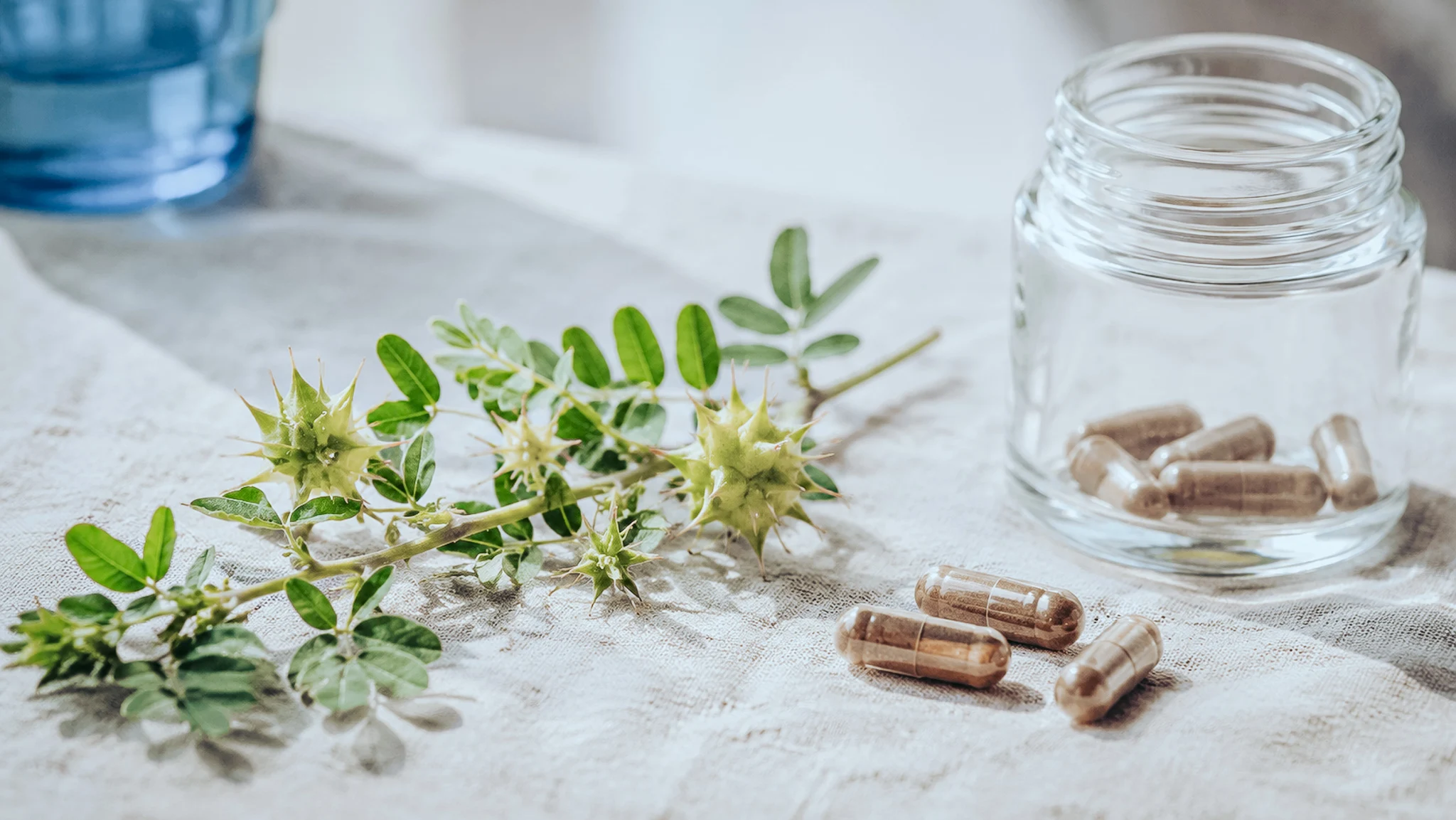
Few plants carry as many promises and as much suspicion as Tribulus terrestris. One day it is sold as a miracle testosterone booster; the next it is typed into Google at two in the morning, with the uneasy question of whether it is dangerous. The reality is calmer, and more interesting, than either extreme. This guide takes the honest tour: what this plant really is, what it does, what it does not do, how to choose it and how to take it.
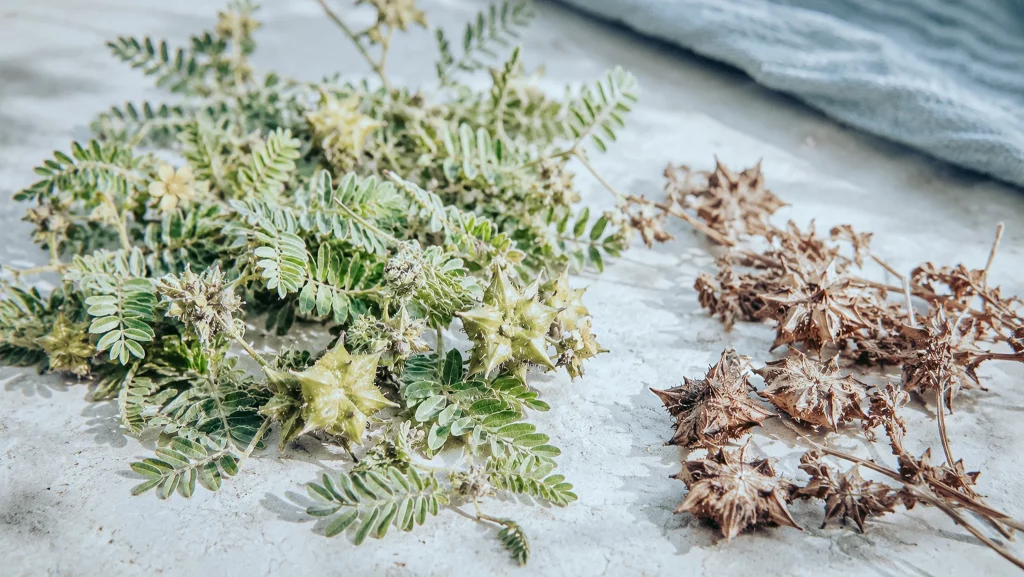
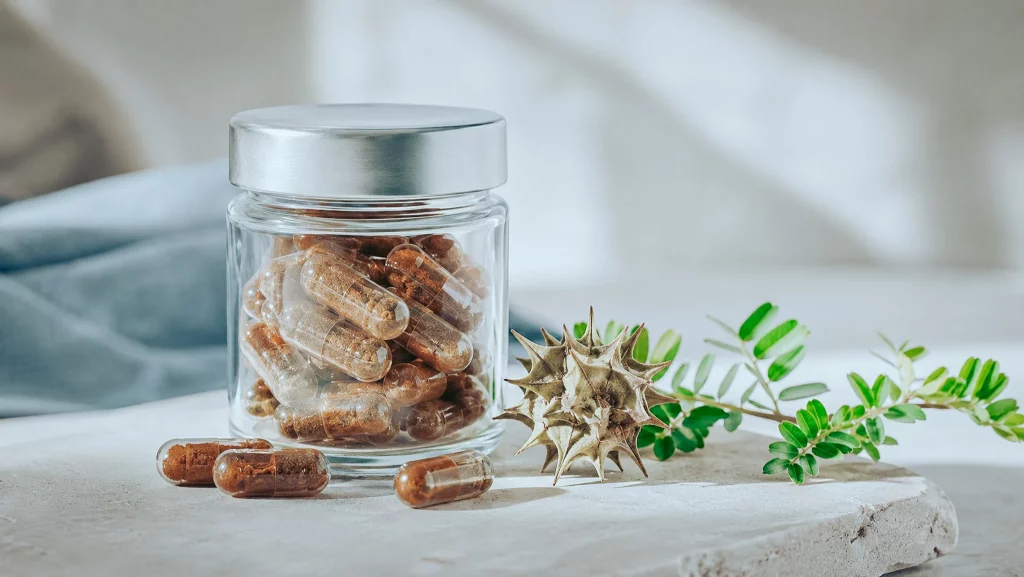
Tribulus terrestris is a perennial plant used for centuries in Ayurvedic and traditional Chinese medicine, where it was credited with a role in vitality and sexual function. What matters to us today is not the folklore but the chemistry. The plant is rich in steroidal saponins, a family of plant compounds, and above all in protodioscin, the molecule to which research attributes most of its effects.
Its make-up varies enormously with geographical origin and the part used (fruit, leaves or roots). A selected fruit extract has nothing in common with a cheap root powder. It is exactly that detail, invisible on the label, that explains why two products both called “Tribulus” can behave in completely different ways.
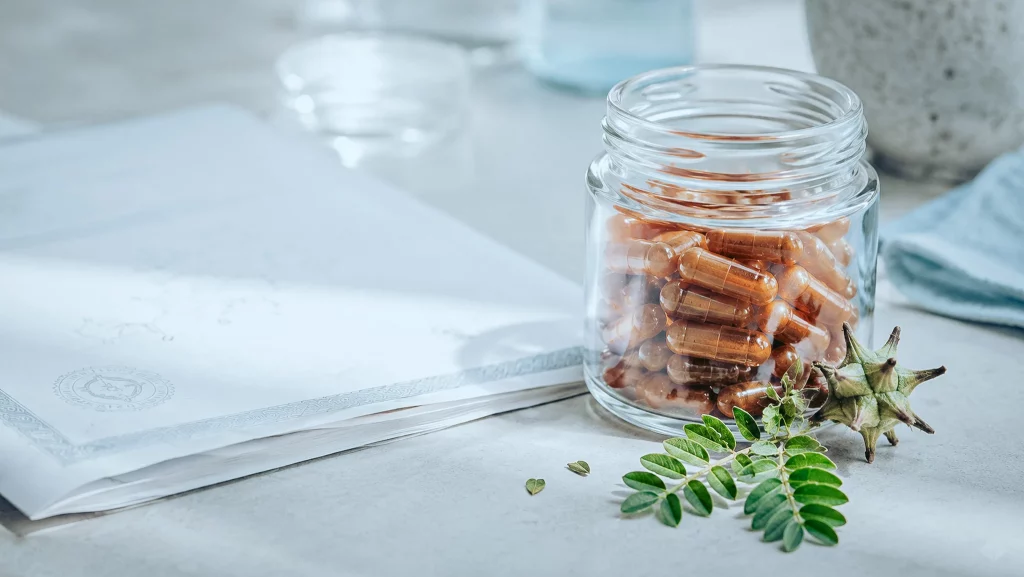
Here is the information most brands prefer to keep vague. Almost every extract on the market is standardised to total saponins, a flattering but largely meaningless figure: you can declare “90% saponins” and still deliver an extract that is poor in the molecule that actually works. The work is done by protodioscin, and that is what you should look at.
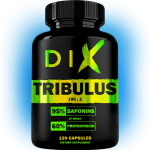
That is precisely the choice behind our DIX Tribulus terrestris: a fruit extract, standardised to 95% saponins of which 60% protodioscin, with a 100:1 concentration ratio, certified free of mycotoxins and made in a French laboratory. When you compare two tribulus products, do not compare the total-saponin percentages, compare the protodioscin. It is the only line that truly counts. This is not a detail: a product that only prints “95% saponins” tells you nothing about how much of the active molecule is really in the capsule.
Very high concentration: Purified Tribulus Terrestris extract (Ratio 100:1) with the highest Protodioscin rate in Europe Power &…
In stock
Let us be clear, because this is where the market keeps the biggest misunderstanding alive. In young, healthy men, serious studies show no significant increase in testosterone. The most cited study on the subject, carried out in young men, concludes that tribulus does not influence androgen production (Neychev & Mitev). A 2025 systematic review of clinical trials reaches the same verdict: no robust evidence that tribulus raises testosterone. At European level, no health claim for a hormonal rise is authorised.
So where does the reputation come from? Because tribulus acts elsewhere. Traditional data and part of the research point to a more credible interest in libido and sexual function, probably through a mechanism independent of testosterone. In other words: feeling a rise in desire does not mean your hormone level has gone up. It is a nuance the labels conveniently forget, and exactly the kind of honesty that stops you buying for the wrong reasons.
We dig into this in a dedicated article: what the science really says about the link between tribulus, testosterone and bodybuilding.
At sensible doses and with a well-traced extract, tribulus is generally well tolerated. The most common side effects are mild and digestive, mostly on an empty stomach. There are, however, real contraindications (pregnancy, breastfeeding, hormone-dependent cancers, certain treatments).
The real caution concerns the quality of the product, not the plant itself. The NIH LiverTox database records rare cases of liver injury linked to tribulus products, and the plant contains β-carboline alkaloids that the EFSA compendium places among substances “of possible concern”. But above all, undeclared anabolic steroids have repeatedly been detected in tribulus products. Tribulus itself is not a banned substance, yet a contaminated product could still disturb a doping test, which is why the US Department of Defense supplement-safety programme advises choosing products that carry a third-party certification seal. Clear origin, an identified plant part, a guarantee free of mycotoxins and an identifiable manufacturer are what separate a serious extract from an opaque one. We devote a whole article to the real dangers and side effects of tribulus, without dramatising them and without hiding them.
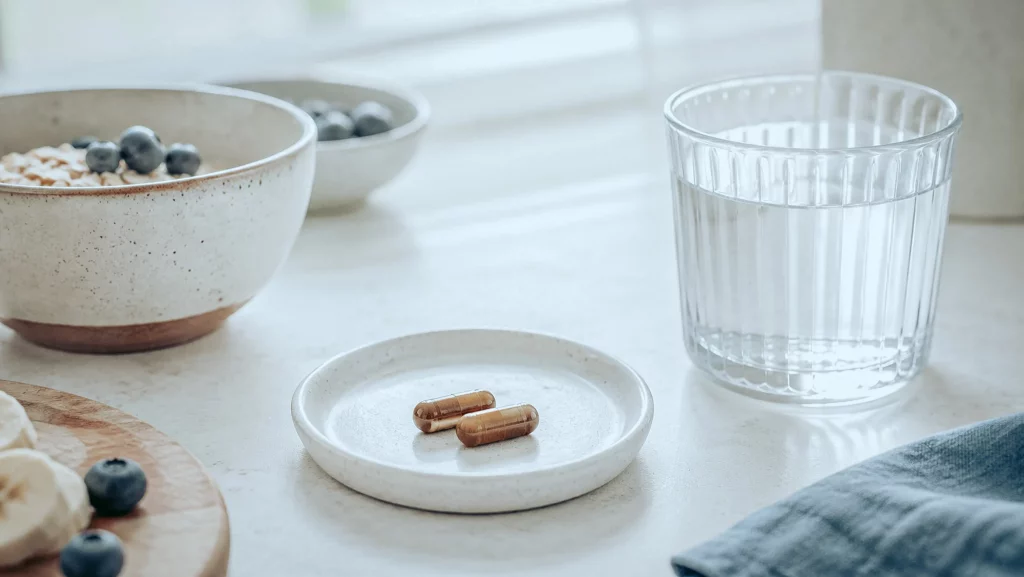
The rule is simple: 1 to 2 capsules a day, preferably in the morning and with a meal, to look after digestion. Overdosing adds nothing, the protodioscin concentration does the work. Questions about courses and cycles, the best time and the duration deserve a few details, which we gather in the tribulus dosage guide.
Tribulus is not reserved for men. In men, the interest centres on libido and tone. In women, part of the available work even points to a more favourable effect on desire and satisfaction, especially at certain stages of life. Needs and expectations differ, which is why we treat the two audiences separately.
A good tribulus is recognised by four things: a standardisation in protodioscin (not just total saponins), a clearly stated origin and plant part, a purity guarantee (free of mycotoxins) and an identifiable manufacturer. The lowest price almost always hides an extract titrated blind. Our guide to choosing a good tribulus lays out the grid that keeps you from getting it wrong.
Many people look for ready-made blends (tribulus, maca, zinc). Rather than an opaque formula, it usually makes more sense to build your own routine from well-dosed actives chosen for your goal: zinc and magnesium for the hormonal ground and sleep, an adaptogen such as rhodiola for energy and stress. We explain which combinations make sense and which are mostly marketing.
The essentials about tribulus
Tribulus does not reliably raise testosterone in the healthy man. Its real interest lies in libido, vitality and tone. Quality is judged on protodioscin, not on total saponins. A well-traced extract, taken as 1 or 2 capsules in the morning, is well tolerated. Be wary of hormonal promises and vague titrations.
Frequently asked questions about Tribulus terrestris
In young, healthy men, serious studies show no significant increase in testosterone. The documented interest lies rather in libido and sexual function, through a mechanism independent of the hormone level.
The protodioscin content, not the total-saponin percentage usually put forward. Our extract is standardised to 95% saponins of which 60% protodioscin.
No. Tribulus is not a steroid and is not on the WADA prohibited list. The real risk is contamination: undeclared anabolic steroids have been found in some products, which is why a traceable, third-party-tested extract matters.
Usually 1 to 2 capsules a day, preferably in the morning and with a meal for better tolerance.
Yes. Part of the research even points to a more favourable effect on desire and satisfaction in women. The usual precautions (pregnancy, breastfeeding) still apply.
Vous devez etre connecte pour laisser un commentaire.