5€ on your First Order with the code BEA10Gift offered from €150 purchaseFree shipping on orders over 70€More than 10,000 satisfied customersPayment 100% secureShipping within 24h
Omega 3 side effects: real risks or exaggerated fears?
Wondering whether a supplement could be bad for you before taking it every day is already the right instinct. When you add something to your daily routine, the first question isn’t “what will it do for me?”, it’s “could it harm me?”. So let’s ask that question straight out about omega 3.
The trouble with the word “danger” is that it mixes up two things that have nothing to do with each other. There are vague fears, fed by alarmist headlines, and there are real points to watch, concrete ones that deserve attention. This article separates the two. We’ll acknowledge what the sceptics get right, point out the only risk that really matters (and it’s not the one you think), go through the real side effects, the overdose question and the rare situations where you need medical advice. No drama, and no sales pitch either.
What the sceptics get right
Let’s start by admitting they’re partly right. If you’ve read that omega 3 supplements “don’t do anything”, or have “more downsides than benefits”, those criticisms don’t come from nowhere. Several serious analyses have shown that, in certain populations, taking an omega 3 capsule a day doesn’t change much in major health indicators. There’s no conspiracy here: when a study tests any old oil, at a low dose, in people who already eat fish, a lukewarm result is only logical.
But these criticisms almost always forget one decisive distinction: not all omega 3s are equal. Lumping together a poor, oxidised, underdosed oil and a fresh, concentrated one is like judging “coffee” after only tasting lukewarm instant. The “danger” of an omega 3, or its uselessness, isn’t down to the molecule. It depends on the quality of what’s in the capsule. That’s a different conversation.
In other words, the right question isn’t “are omega 3s dangerous?” but “under what conditions can an omega 3 cause a problem?”. And on that, there are clear answers.
The real number one risk: oxidised oil
Here’s the point nearly every article on omega 3 danger leaves out, even though it’s the only one that really deserves the word. Fish oil is a fragile fat. Its very richness, the highly unsaturated fatty acids that make EPA and DHA so useful to your cells, is also what makes it go rancid when exposed to air, light, heat and time. An oil going rancid is an oil oxidising.
And an oxidised oil isn’t just “less effective”. It has lost some of its active EPA and DHA, and brings in oxidation compounds you could happily do without. Let’s be honest about the level of evidence: in humans, data on the direct harm of rancid oil is limited, and we shouldn’t fall into alarmism in the other direction. But two things are certain. An oxidised oil no longer gives you what you bought it for. And swallowing oxidation compounds every day has no upside. The risk isn’t in the omega 3 molecule, it’s in its condition.
Freshness is measured with an indicator, TOTOX: the lower it is, the more stable the oil. A number shown on a website guarantees nothing by itself, as our guide to choosing an omega 3 supplement explains. The key point here: the avoidable danger is this one.
The one danger that's really in your hands
A badly stored fish oil oxidises, loses EPA and DHA and picks up unwanted compounds. It’s the only omega 3 “danger” you can do something about: choose a fresh oil that’s been kept cold, and keep your bottle in the fridge once opened. An oil that smells very strongly of fish, has a harsh taste or has darkened has aged badly.
This fragility starts long before your kitchen. According to GOED, the industry’s trade body, every extra 10°C makes oxidation two to three times faster. That’s why we let our omega 3 run out of stock during summer 2026 rather than send it by lorry in the heat, and why we supply fridges to our partner resellers.
The good news is that this makes the main risk one you can choose to avoid, not something you just have to accept. That’s the whole point of our guide to choosing a fresh, pure oil, criterion by criterion. This article shows you where the risk is, that one shows you how to get around it.
What is the best omega 3 supplement? Forget the rankings: freshness, real EPA and DHA content, form, source, purity, packaging and ratio are what count.
Heavy metals and microplastics: a real but avoidable risk
The second legitimate point to watch is also real: the sea is polluted. Fish build up heavy metals (mercury above all), PCBs and microplastics in their flesh. And the bigger and longer-lived a fish is, the more contaminants it concentrates, because it eats smaller fish that are already loaded. This is called bioaccumulation.
Which gives two opposite ways of looking at it. Eating lots of big predatory fish for your omega 3 isn’t necessarily the best deal on contaminants. By contrast, an oil from small, wild oily fish (sardines, mackerel, anchovies), which are short-lived and feed on plankton right at the bottom of the chain, starts from a much cleaner raw material. And a properly purified oil, tested on every batch, removes most of what might remain. That’s even an argument for a good capsule over raw fish: control. On our oil’s certificates, online for every batch, mercury is 20 times below the EU limit, PCBs 20 times below and lead 120 times below.
So the real danger here isn’t “omega 3 in capsules”. It’s omega 3 whose source and testing you know nothing about. An anonymous oil, with no species stated and no analyses, deserves your suspicion, just like a fish of unknown origin.
Common side effects: real but mild
On to the practical part, what you actually feel when you take omega 3. Most side effects are real, but they’re mild and easy to avoid. There’s no need to make a drama of it.
The most frequent ones are digestive and harmless:
fishy burps;
sometimes mild stomach discomfort;
more rarely, loose stools if you jump straight to a high dose.
None of this is dangerous. These are signs of discomfort, not alarm bells.
One myth is worth correcting, because it’s everywhere: a fishy burp doesn’t mean your oil is oxidised or off. Most of the time it’s just about when you take it. Swallowing capsules on an empty stomach, or at the very end of a meal, encourages these burps. The fix fits in one sentence.
How to avoid side effects
Take your omega 3 during a meal, ideally one containing some fat. These are lipids: they’re better absorbed alongside other fats, and taking them mid-meal gets rid of the vast majority of burps. If you’re just starting, begin with one capsule and build up gradually rather than jumping straight to a high dose.
A word on flavoured oils, meant to “hide the fishy taste”. A quality softgel has no taste once swallowed anyway, and the flavouring often just covers up an oil that’s already tired. The right move isn’t to perfume the problem, it’s to prevent it with a fresh oil taken at the right time.
Can you take too much omega 3?
It’s one of the most searched questions: “too much omega 3, what are the symptoms?”. Let’s put your mind at rest, with numbers. At normal supplement doses, overdosing on omega 3 is very hard to do. EFSA, the European Food Safety Authority, looked at the question and concluded, in a reference opinion, that supplemental intakes of EPA and DHA combined of up to about 5 g a day raise no safety concern for healthy adults. For comparison, a typical supplement provides around 1 to 2 g of EPA and DHA a day. That’s a long way off.
1,5
✅
How much omega 3 before worrying?Slide: your daily intake of EPA + DHAg of EPA + DHA / day1-2 g: usual5 g: threshold6 gUsual intake: you are well within the safe zone.No safety concern zone (EFSA).Beyond the EFSA benchmark of 5 g per day: unnecessary in regular supplementation, to be considered only with a healthcare professional.EFSA estimates that additional intakes of EPA + DHA up to about 5 g per day do not raise safety concerns in healthy adults. Regular supplementation is around 1 to 2 g. We are far from the mark.
If you really did go far beyond that for a long time, the possible symptoms would still be moderate: marked digestive problems, and perhaps a slight tendency to bleed a little more easily (a bruise that takes longer to fade). Nothing dramatic at the amounts people swallow in real life.
One point is worth knowing, though. In large cardiovascular trials, high-dose omega 3 has been linked to a slightly higher risk of atrial fibrillation, a heart rhythm disorder. The latest review, pooling 35 trials, only finds this signal in people already at high cardiovascular risk taking more than 1.5 g of EPA and DHA a day, with around 8 extra cases per 1,000 people. The UK’s medicines regulator, the MHRA, issued a warning along the same lines in January 2024 for prescription omega 3 ethyl esters. If you have a history of heart problems or a rhythm disorder, talk to your doctor before going above that dose.
The real imbalance to watch, by the way, isn’t too much omega 3, it’s too much omega 6. The modern diet, rich in vegetable oils and processed foods, delivers huge amounts of omega 6, which share the same pathways in the body as omega 3 and end up holding back their benefit. Rebalancing means cutting omega 6 as much as raising omega 3, not stacking omega 3 capsules without end.
One honest caveat while we’re on excess. There is a trap, but it doesn’t involve standard fish oil: it’s cod liver oil. Unlike oil extracted from the flesh of the fish, liver oil is naturally rich in vitamins A and D, and there, a prolonged excess can be a real problem, especially with vitamin A. The NHS advises no more than 1.5 mg of vitamin A a day from food and supplements combined. Two products, two safety profiles. If you take a fish body oil, this doesn’t concern you. If you take cod liver oil, don’t stack high doses without advice.
Interactions and precautions: the rare cases to check with your doctor
This is where we stay cautious, because this is where the “danger” can become real for some people. For the vast majority, omega 3 poses no problem. But a few situations call for medical advice before you start, and we’d rather tell you clearly than brush the question aside.
Blood thinners or antiplatelet treatment. You may have read that omega 3 “thins the blood”. The fear of bleeding was pushed for a long time, but recent research has largely toned it down: at usual doses, the increase in bleeding risk, including alongside these treatments, looks small. That’s no reason to decide alone. If you’re on a blood thinner, talk to your doctor, who’s the only one who can judge your situation.
Planned surgery. As a precaution, some doctors advise stopping supplements a few days before an operation. Here too, several studies have now scaled back the concern, but the instruction depends on your surgeon and the operation. Follow their advice, not a blog post.
Pregnancy and breastfeeding. This is actually good news: getting enough DHA matters during this period for brain and eye development. The care needed isn’t about omega 3 itself but, once again, about the type of oil (avoid cod liver oil, which is high in vitamin A) and about purity from contaminants. A purified, tested oil is a real asset here. As always in this situation, get guidance from a healthcare professional.
Finally, if you have a known allergy to fish or shellfish, caution obviously applies, including with the capsule shell when it’s of marine origin.
So, are omega 3s dangerous?
Let’s bring it all together, because this is where the fear deflates. No, omega 3s aren’t dangerous in themselves. What can cause a problem is never the molecule: it’s almost always a question of quality, an unreasonable dose or a specific medical situation. The table below puts the real dangers on one side and the exaggerated fears on the other.
Real dangers or false fears?Press each card to flip it and find out if it's a real point of vigilance or an exaggerated fear.Press to flipAllReal pointsFalse fearsReal point of vigilanceExaggerated fearReal point of vigilanceExaggerated fearFlipped: {done}/{total} · {real} real points · {myth} false fearsAn oxidized, rancid or poorly stored oilIt loses its EPA and DHA content and brings oxidation compounds. This is the only danger really under your control: choose a fresh oil, kept cold until you."Omega 3s are dangerous" in generalFalse: it all depends on the quality of the oil. A fresh, concentrated, and tested oil poses no danger for the vast majority of people.An oil of unknown source, never testedWithout specified species or analyses of heavy metals and pollutants, an oil deserves your mistrust, like a fish of unknown origin."Overdosing looms at the slightest deviation"The EFSA does not raise safety concerns up to about 5 g of EPA + DHA per day, while a common intake is around 1 to 2 g.Cod liver oil taken in prolonged excessRich in vitamins A and D, unlike fish flesh oil: prolonged excess can really pose a problem, especially for vitamin A."A fish burp = spoiled oil"Most often, it's simply taking it on an empty stomach or at the end of a meal. Swallowing your capsules during a fatty meal makes most burps disappear.A particular medical situationAnticoagulant, scheduled surgery, pregnancy: nothing alarming, but these cases justify the advice of a healthcare professional before supplementing."It dangerously thins the blood"At usual doses, recent research has largely nuanced this risk, even with an anticoagulant. Caution yes, disproportionate fear.
The conclusion fits in one word, the same one as from the start: quality. A cheap, oxidised omega 3 of murky origin may well do nothing for you, or even cause discomfort. A fresh, concentrated oil from small fish, tested batch by batch and taken with a meal, poses no risk for the vast majority of people and gives you what you expect from it. The danger isn’t in omega 3. It’s in bad omega 3.
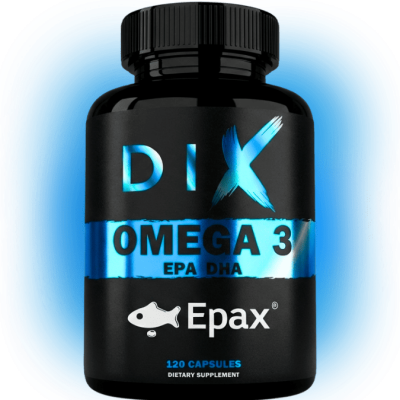
That’s exactly why we built our omega 3 the way we did: an EPAX oil rich in EPA and DHA, in triglyceride form, from small wild fish, tested batch by batch and above all kept in a cold room at 0 to 4°C from the day it arrives, because freshness is a safety issue before it’s a question of benefits.
To go further without tipping into fear: our guide to choosing turns everything you’ve just read into a practical checklist for judging any tub. On the plate, our list of omega 3 rich foods completes the picture.
Are omega 3s dangerous for your health?
No, not in themselves. At normal supplement doses and in a healthy person, omega 3s aren’t dangerous. What can cause problems is a poor-quality oil (oxidised, of unknown origin, untested), an unreasonable dose or a specific medical situation (blood thinners, surgery, pregnancy) that calls for medical advice. The risk lies in the quality of the oil, not in the omega 3 molecule.
What are the side effects of omega 3 capsules?
They’re generally mild and digestive: fishy burps, slight stomach discomfort, sometimes loose stools if you raise the dose too quickly. You can largely avoid them by taking your capsules during a meal containing some fat and by building up the dose gradually. A fishy burp doesn’t mean the oil is off: it’s usually down to taking it on an empty stomach or at the very end of a meal.
What are the symptoms of too much omega 3?
Overdosing is hard to do with normal supplements. EFSA considers that supplemental intakes of EPA and DHA combined of up to about 5 g a day raise no safety concern for healthy adults, while a typical intake is around 1 to 2 g. If you went far beyond that for a long time, symptoms would stay moderate: digestive problems and a slight tendency to bleed more easily. The imbalance to watch is more often too much omega 6 in the modern diet.
Is fish oil dangerous?
A fresh, purified, good-quality fish oil isn’t dangerous. The two real points to watch are oxidation (a rancid, badly stored oil loses its benefits and brings in unwanted compounds) and contaminants (heavy metals, PCBs), which are more present in bigger fish. An oil from small wild fish, tested batch by batch and kept cold, removes most of these risks. Don’t confuse fish oil with cod liver oil, which is rich in vitamins A and D.
Can you take omega 3 with blood thinners or before surgery?
The fear of bleeding was emphasised for a long time, but recent research has largely toned it down: at usual doses, the increase in bleeding risk looks small. That doesn’t remove the need for caution. If you’re on a blood thinner or antiplatelet treatment, or have surgery planned, talk to your doctor or surgeon before taking supplements: only they know your situation.
This content is for information only and does not replace advice from a healthcare professional.


You must be logged in to leave a comment.