

Article
Berberine and weight loss: myth?
Discover if berberine helps with weight loss: metabolic mechanisms, dosage, and scientific studies. Usage tips and side effects.


A man and a woman take exactly the same berberine capsule, at the same dose, for three months. Logically, they should achieve the same result. A study published in October 2026 shows the opposite: in women, the decrease in cholesterol was almost three times stronger, and testosterone moved in the opposite direction depending on the sex.
I devoted a video to this study. This article follows its reasoning with the figures, the limitations, and the state of the file in Europe, where berberine is subject to a provisional unfavorable opinion. I am the founder of DIX, and our Fat Burner contains berberine: we therefore have an interest in this subject, and each figure below has its source.
The short answer
The result: at 1 g per day for 12 weeks, berberine lowered apoB, total cholesterol, LDL, and Lp(a) in women, with an effect almost three times weaker in men. Testosterone decreased in women and slightly increased in men: it is not a booster. In Europe, the EFSA estimates in a provisional opinion of 2026 that no dose of berberine can be considered safe; the final decision has not been made.
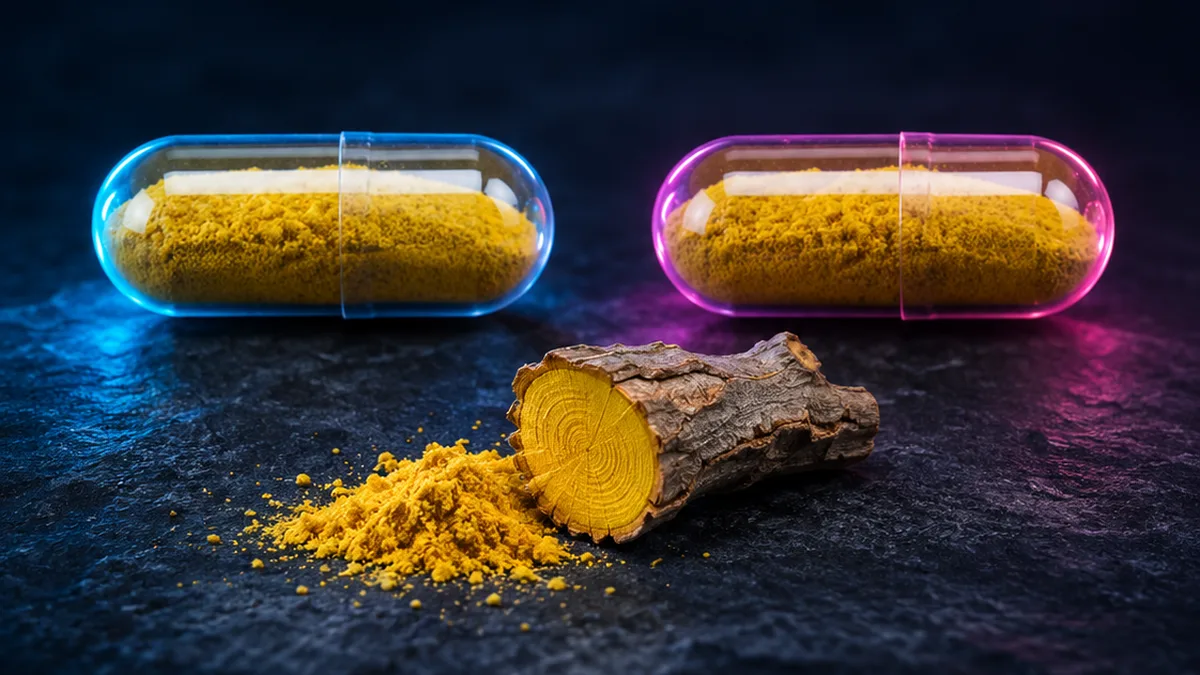
Berberine is a yellow molecule found in several plants, including barberry (Berberis vulgaris), and has long been used in traditional Chinese medicine. In the United States and the United Kingdom, it is freely sold as a supplement. On social media, it is nicknamed “the natural Ozempic.” However, no trial has directly compared it to this medication: the nickname stems from marketing, not science.
What is better established is its effect on blood lipids. Several trials and meta-analyses support this, and according to the study authors, the 2019 European recommendations on dyslipidemias cite it among the options for people who poorly tolerate statins. [1] [2] One question remained that no one had really asked: does it act the same way in women and men?
A team from the University of Hong Kong conducted two randomized, double-blind, placebo-controlled trials. The first involved 84 men and was completed at the end of 2020. The second, years later, involved 100 women. All were between 20 and 65 years old and had slightly elevated cholesterol or triglycerides. For 12 weeks, half took 500 mg of berberine twice a day, the other half an identical capsule without berberine. [1]
The interesting detail: the men’s blood had been frozen at −80 °C. The researchers took it out to analyze it exactly like the women’s, with the same technique and in the same laboratory. This is what makes the comparison possible. The main criterion was apolipoprotein B (apoB). The trials were funded by a public fund from Hong Kong, and the authors declare no conflicts of interest.
In women, the results are clear. Compared to the placebo, apoB decreased by 0.13 g/L, from a baseline value of 0.9 g/L: about 14% less. Total cholesterol, LDL, triglycerides, and lipoprotein(a) also decreased, and these effects remain significant after correction for multiple comparisons. [1]
In men, the direction is the same, but the effect is much smaller: almost three times weaker on apoB, and nothing significant on LDL or Lp(a). The gender gap is significant on apoB, total cholesterol, LDL, and Lp(a), with heterogeneity from 83 to 85%.
The results are expressed in standard deviations, a unit that allows different measurements to be compared with each other. Click on “Testosterone” in the chart: it’s the strangest part of the study.
Each particle of “bad” cholesterol, LDL, IDL, or VLDL, carries a single apoB. Measuring it is like counting the trucks rather than weighing the goods. It is these particles that are directly involved in artery diseases, hence the growing interest of cardiologists in this marker.
Lipoprotein(a) is a cholesterol mainly determined by your genes, which diet and exercise have little effect on. The kind of guest who settles on your couch and never leaves. Seeing it decrease in women is therefore an interesting signal. With a caveat: most participants already had normal Lp(a) levels (medians around 18 to 20 mg/dL), and we don’t know what berberine would do for someone with very high levels.
The researchers also looked at hormones. After 12 weeks, berberine lowered total testosterone in women (−0.42 standard deviation) and increased it in men (+0.43). [1] Same product, opposite effect.
In women, this is not necessarily bad news. In polycystic ovary syndrome, where testosterone is often too high, this is even what we seek to achieve, and this is where the only two previous trials in women had been conducted.
No, this is not a testosterone booster
In men, the increase is modest and barely significant: the lower bound of the confidence interval is at 0.004. It crosses the finish line, but in a decline. Moreover, berberine has also raised SHBG, the protein that holds testosterone in the blood. Free testosterone, the one that acts, has probably not changed.
The authors propose two avenues, without deciding.
What really happens in the blood. Another study, published in 2025, measured berberine after a single intake: in women, there was about 2.8 times more in total in the blood, with a peak 3.6 times higher. [3] A liver enzyme that breaks it down, CYP2D6, might not work the same way depending on the sex. At the same dose, women would therefore retain much more. It’s a bit like ordering the same coffee as your partner and seeing her receive, without extra charge, a gourmet coffee.
The hormones. Berberine activates AMPK, a kind of energy switch for cells, which fasting and physical activity also stimulate. Estrogens activate this same switch. In women, the two effects could add up. The authors themselves write that this mechanism remains to be verified, and in this study, no one measured berberine in the blood.
Before rushing to buy, let’s look at what these two trials do not say.
The authors describe them themselves. None invalidate the result, all invite confirmation.
Let’s add that all participants were of Chinese origin. On the safety side, no serious effects were reported over these three months, and liver enzymes (ALT and AST) remained stable. Keep in mind that berberine is not suitable for everyone: your stomach may let you know very quickly.
While Hong Kong tests berberine against cholesterol, Europe is closely examining it. On January 29, 2026, the EFSA, the European Food Safety Authority, adopted a draft opinion on plant preparations containing berberine, at the request of the French agency, Anses. [4] [5]
His conclusion: no dose can be considered safe. The EFSA relies in particular on genotoxicity signals observed in the laboratory, on data in rodents, on rare liver damage that cannot be predicted, and on missing studies.
The steps known as of November 10, 2026, and what may follow.
Sources: EFSA, draft opinion of January 29, 2026; NutraIngredients, March and July 2026; regulation (EC) 1925/2006, article 8.
A nuance matters: “we cannot set a safe dose” does not mean “it is dangerous”: it means that we do not have enough data to assert that it is safe.
A three-month trial on 100 people may show the absence of frequent severe effects. It cannot detect a rare reaction that would affect one person in several thousand. It is precisely this type of reaction that concerns the EFSA.
Before taking it
If you have cholesterol or are undergoing treatment, talk to your doctor: berberine does not replace any medication and may interact with some of them, as it inhibits liver enzymes that eliminate many (CYP2D6, CYP3A4). It should be avoided during pregnancy and breastfeeding; pregnant or breastfeeding women were actually excluded from the study.
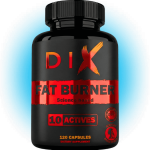
Our Fat Burner contains 350 mg of berberine extract for 4 capsules, alongside nine other active ingredients: L-carnitine, L-tyrosine, ginger, mate, guarana, green tea, coleus, grapefruit, and cayenne pepper, plus a bit of black pepper. Each dose is indicated in milligrams on the label.
This is a much lower dose than the gram of pure berberine given daily in the study. So we won’t tell you it lowers your cholesterol: no such claims are allowed, and the study didn’t test it. We keep berberine because it remains a relevant molecule, with more and more studies, and we closely follow the EFSA’s opinion. If the regulations change, our formula will change with it.
10-in-1 Fat Burner: Ultra-complete formula combining L-Carnitine (1g), Berberine, and Forskolin to optimize fat…
In stock
Ultimately, the most interesting lesson goes beyond berberine: the same dose does not mean the same effect. Before this study, there were only two trials on berberine in women, both in polycystic ovaries. A result obtained in men does not always copy-paste to women, and the vast majority of studies are still conducted on men.
Your questions about berberine
In trials, yes. In the Hong Kong study published in 2026, 1 g per day for 12 weeks reduced apoB by about 14% in women compared to placebo, with an effect nearly three times weaker in men. It does not replace treatment: talk to your doctor about it.
In the men of the study, total testosterone slightly increased, just significantly, but SHBG also increased: free testosterone probably did not change. In women, it decreased. This is not a testosterone booster.
Two hypotheses: women may retain more in the blood (2.8 times more in a 2025 study), and estrogens activate the same enzyme as berberine, AMPK. Neither has been verified in this study.
No, not on November 10, 2026. EFSA published a provisional opinion in January 2026 stating that no dose can be considered safe. The final decision has not been made; it could range from monitoring to prohibition.
Mainly digestive issues: in the trial among women, 20 reported digestive disorders under berberine compared to 8 under placebo. No serious effects were observed over 12 weeks. It may interact with medications and is not recommended during pregnancy and breastfeeding.
To go further, this article covers the weight side.
Discover if berberine helps with weight loss: metabolic mechanisms, dosage, and scientific studies. Usage tips and side effects.
Article from the video by Cyril Certain, supplemented by the full reading of the study. This content is informative and does not replace the advice of a healthcare professional.
You must be logged in to leave a comment.