5€ on your First Order with the code BEA10Gift offered from €150 purchaseFree shipping on orders over 70€More than 10,000 satisfied customersPayment 100% secureShipping within 24h
Is your fat burner safe?Assess the safety of your fat burner in 2 minutes. Find out if your product meets safety criteria or poses a risk to your health.Based on health authorities' recommendations — Immediate personalized assessment — 8 quick questionsAssess the safety of your fat burnerAnswer these questions to find out if your fat burner is safeQuestionPreviousNextSee my resultsRestart the quizSafety ScoreSafety IndexAnswer the questions to discover your scoreWhere did you buy your fat burner?Official site or pharmacy/parapharmacyKnown e-commerce site (Amazon, etc.)Social networks, black market or unknown sellerDoes your product have European certification?Yes, made in France/EU with certificationsI don't know / not verifiedNo, or product imported outside the EUIs the caffeine dosage clearly indicated?Yes, precise dosage in mgMentioned but not preciseNot indicated or product without ingredient listDoes the product contain ephedrine, DMAA or DNP?No, none of these substancesI don't knowYes, or I suspect their presenceIs it an injectable product?No, capsules or powder onlyNot applicableYes, injectionHow much caffeine do you consume in total per day?Less than 300mg (fat burner + coffees included)Between 300 and 400mgMore than 400mg or I don't knowDo you have heart, anxiety or kidney problems?No, no health problemsMinor problems or caffeine sensitivityYes, heart/anxiety/kidney problemsDo you follow the manufacturer's recommended dosage?Yes, always the indicated doseSometimes I slightly exceedI take more to speed up resultsSafe useYour fat burner seems safe and you are using it correctly. Keep it up for lasting results without risk.Good practices to maintain:Continue to follow the recommended dosagesMonitor your total caffeine consumptionFavor products with complete traceabilityAvoid taking after 4pm to preserve your sleepCaution recommendedSome points deserve your attention. Check your product's composition and adjust your habits.Points to improve:Check your product's European certificationCalculate your total daily caffeine intakeStrictly follow the recommended dosagesConsult a doctor if you have doubtsIdentified risksYour use poses risks to your health. Changes are needed immediately.Urgent actions:Stop non-certified or dubious source productsNever exceed 400mg of caffeine per dayChoose a fat burner with transparent compositionConsult a health professional before continuingDANGER - Immediate stop recommendedYour situation poses serious health risks. Injectable products and banned substances can be deadly.URGENT actions:IMMEDIATE stop of any injectable productConsult a doctor urgently if you have symptomsNEVER take DNP, ephedrine or DMAAFavor only legal and certified supplements
Let’s be honest for a second: I’ve seen a lot of fat burners come and go, and the word “danger” that sticks to them is neither fully deserved nor completely wrong. The truth sits somewhere in between. The French food safety agency, like its EU counterparts, actually ranks weight-loss products among the biggest sources of reported side effects tied to food supplements.
So yes, there is a real fat burner danger, but rarely the one people picture. Most of the time the problem isn’t the molecule itself, it’s how you use it, and what you stack on top of it without thinking. Let’s calmly sort out what can genuinely land you in A&E from what just takes a bit of common sense.
What are fat burners and how do they work?
Fat burners are supplements designed to support fat loss by acting on your metabolism: the higher your basal metabolic rate, the more calories you burn, even at rest. They come as capsules or powder, and combine active ingredients meant to help mobilise stored fat. Nothing magical here, just physiology, which the diagram below sums up better than a long speech.
IngestionThe actives (caffeine, green tea, L-carnitine...) are absorbed by the bodyActivationThe basal metabolism increases = more calories burned at restThermogenesisThe body temperature rises slightly, promoting fat burningLipolysisStored fats are mobilized and used as an energy source
Which fat burners are absolutely dangerous to avoid?
Let’s start with the worst, the kind that truly earns the word “danger”. Injectable fat burners are strictly banned in many countries (France, the United States, the United Kingdom, Australia, Canada) because of the serious risks they carry. In a world that wants results a little too fast, too many people still turn to them out of sheer unawareness of the real danger, which can go as far as death.
Injectable products: a deadly practice
BannedLethalHypoosmolar injectionsCause fat cells to burst uncontrollably, leading to severe tissue damage.Massive cell destruction, severe inflammationCarboxytherapyInjection of CO₂ under the skin. Non-medical practice that can cause gas embolism.Potentially lethal gas embolismMesotherapy cocktailsUnregulated mixtures whose exact composition is often unknown, even to the seller.Unknown composition, unpredictable reactions2,4-Dinitrophenol (DNP)Initially used as a pesticide and explosive, DNP is sometimes sold as the "ultimate fat burner". It causes an uncontrollable increase in body temperature. There is no antidote.Lethal hyperthermia, rapid death even at low dose. Several deaths each year in the fitness world.Body temperatureNormal: 37°CBlack market substances to avoidEphedrineSubstance banned in France and the United States for its severe cardiac effects (arrhythmias, heart attacks)Methylhexanamine (DMAA)Powerful stimulant that can cause strokes, heart attacks, and severe hypertensionUncontrolled dosagesIllegally imported products sometimes containing 10x the recommended dose of active substancesMassive hematomasEmergency surgery requiredSevere infectionsResistant to antibioticsTissue necrosisPermanent scarsHeart failurePotentially lethal
The table speaks for itself, but the rule to remember is simple: anything injectable, anything containing DNP, ephedrine or DMAA, and anything bought from a non-EU site with no traceability, you avoid, no exceptions. No amount of fat loss is worth that level of risk. So we can only advise you to go for legal fat burners, and to understand how they work so you can sidestep even the smaller side effects.
What are the side effects of legal fat burners?
Even a legal fat burner can cause side effects when it’s misused or overdosed. Mind you, we’re light years away from the horrors described above. Still, our day-to-day experience with athletes shows it clearly: most problems come from poor dose management across the day, and almost always from caffeine.
A quick word on stimulants, because it’s widely misunderstood. Taking them repeatedly pushes your body to produce cortisol and adrenaline almost non-stop. At first the kick is there. Over time, this nervous overstimulation turns against you: irritability, poor sleep, a background fatigue that rest no longer clears. You’ll sometimes see the term “adrenal fatigue” used here, but that’s a concept mainstream medical literature does not validate. The overstimulation itself is very real, and paradoxical: a metabolism that slows under chronic stress, and performance that drops. You took the product to move forward, and it ends up holding you back.
Fat burner overdose
Here too, it’s a bit of a “let’s beat nature to it” story. So we’d advise against:
Taking several fat burners at once (thinking it speeds up results)
Stacking them with heavily caffeinated pre-workouts
Ignoring your daily coffee and tea intake
The official benchmark is the 400 mg of caffeine per day limit set by EFSA, all sources combined. The trap isn’t a single source but the pile-up, so run the numbers on your actual day with the tool below before you call your fat burner dangerous.
Calculate your daily caffeineCoffees~80 mg / cupTeas~40 mg / cupCaffeine-based fat burner~200 mg / dosePre-workout (doses)~300 mg / doseEstimated total caffeinemgRecommended limit: 400 mg/dayWarning signs based on your consumptionSafe zone0 - 300 mgNormal consumption, no expected side effectsMild symptoms300 - 400 mgTremors, restlessness, excessive sweatingModerate symptoms400 - 600 mgPalpitations, insomnia, anxietySevere symptoms> 600 mgHypertension, cardiac rhythm disordersWho should avoid fat burners?For safety, and even though well-dosed fat burners remain safe supplements, some people should abstain for safety. You'll quickly understand by seeing the list that it's simply common sense:Pregnant or breastfeeding womenHeart problemsAnxiety disordersKidney/liver problemsCaffeine sensitivity
☕
0
How to choose and use your fat burner safely?
You’ll have understood it by now: a fat burner‘s safety mostly comes down to where it’s made and whether you use it sensibly. Rather than drowning you in advice, we’ve boiled down the criteria that actually matter into the checklist below. Run your product through it, and if it ticks every box, you’re good.
Criteria for choosing a reliable fat burnerEuropean certificationGuarantee of strict controlsComplete traceabilityKnown origin of ingredientsWithout ephedrine or DMAAProhibited substances excludedClear caffeine dosageOr caffeine-free formulaGreen tea / MateRich in natural EGCG, boosts metabolismL-CarnitineNatural amino acid, transports fatsCayenne pepperPowerful natural thermogenic effectBerberineEffectively regulates blood sugarGingerRegulates leptin (satiety hormone)How to properly dose your fat burnerStart with a half doseto test your toleranceRespect 200mg of caffeine max/day(all products combined)Avoid taking after 4 PM(to preserve your sleep)Consult your doctorin case of doubt or ongoing treatment
✅
📋
One last point before I let you go, and it matters: no fat burner will ever replace a well-managed calorie deficit. Sleep first, then nutrition, regular training and managed stress, those are the real levers. The fat burner sits on top of all that, never in its place. Keep your expectations realistic and you’ll stay the course.
A fat burner built for your safety and performance
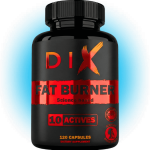
Our daily job is digging into the scientific studies to design optimised formulas. That’s how we developed our DIX Fat Burner, a formula meant to be both safe and genuinely effective.
Let’s just own it, I’m on home turf here. Our formula, developed in certified French laboratories, relies on carefully selected natural actives like green tea, ginger and L-carnitine. And the choice that sets us apart the most is precisely the one that answers everything we’ve just seen about caffeine.
We made the call to go with a formula without added caffeine, aware that most of you already drink coffee or tea daily. That decision removes any risk of stimulant overdose, while keeping it effective thanks to the synergy of our 10 natural actives, each backed by serious studies.
Optimal dosages(the ones recommended in the studies)
A synergy of 10 actives (unique formula)
No added caffeine(for safer use)
43 scientific studies(proven efficacy of each ingredient)
Scientific publications on natural fat burners and weight loss
“Implication of serotonergic pathways in fat-burning supplement-induced gastric dysmotility in mice” (Study on the mechanisms of action of fat burners) DOI: 10.1016/j.crphar.2021.100018
“Multi-ingredient, caffeine-containing dietary supplements: history, safety and efficacy” (Review of fat-burning supplements and their safety) DOI: 10.1016/j.clinthera.2015.01.002
“Dietary factors promoting brown and beige fat development and thermogenesis” (Analysis of foods that activate thermogenesis) DOI: 10.3945/an.116.014332
“Green tea stimulates energy expenditure and fat oxidation” (Research on the thermogenic effect of green tea) DOI: 10.1038/sj.ijo.0802937
“Serotonin as a new therapeutic target for diabetes and obesity” (Study on the role of serotonin in metabolism) DOI: 10.4093/dmj.2016.40.2.89