5€ sur votre Première Commande avec le code BEA10Apigénine Offerte dès 150€ d'achatLivraison gratuite dès 70€ d'achatPlus de 10 000 clients satisfaitsPaiement 100% sécuriséExpédition sous 24h
Do you have a magnesium deficiency?Assess your risk of deficiency by answering these questions about your symptoms, lifestyle, and sports practice.QuestionPreviousNextSee my resultYour resultAnswer the questions to assess your risk of magnesium deficiencyRestart the quizdeficiency riskDo you experience muscle cramps, especially at night or after exertion?Often (several times a week)Sometimes (a few times a month)RarelyNeverAre your muscle aches after training particularly intense or slow to disappear?Yes, very intense (+ 72h)Moderate but persistent (48-72h)Normal (24-48h)Mild or absentDo you feel persistent fatigue despite sufficient sleep?YesSometimesNoHow would you rate the quality of your sleep?Poor (difficulty falling asleep, frequent awakenings)Average (light or non-restorative sleep)Adequate but improvableGood (deep and restorative)What is your training frequency?Intensive (5+ sessions/week)Regular (3-4 sessions/week)Moderate (1-2 sessions/week)Low or nonexistentWhat type of activity do you primarily practice?Weightlifting / CrossFitImpact sports (running, basketball, soccer)Endurance (cycling, swimming)Light activities (yoga, walking)Do you regularly consume foods rich in magnesium?Rarely (few green vegetables, nuts, dark chocolate)OccasionallyRegularlyDaily and variedWhat is your daily stress level?High (chronic stress)Moderate (frequent stress periods)OccasionalLow (well managed)Low riskModerate riskHigh riskProbable deficiencyYour profile does not show major signs of magnesium deficiency. Continue to maintain a balanced diet and monitor your symptoms.Several indicators suggest a moderate risk of deficiency. Preventive supplementation could be beneficial, especially during periods of intensive training.Your profile presents several important risk factors. Magnesium supplementation is strongly recommended to optimize your recovery.The symptoms and factors identified suggest a probable magnesium deficiency. Supplementation is strongly advised, ideally after a blood test.Identified risk factors:Frequent crampsProlonged muscle achesPersistent fatigueSleep disturbancesIntensive trainingHigh muscle demand sportInsufficient dietary intakeHigh stress levelRecommended maintenanceYour diet seems to cover your needs. If training increases, consider supplementation ofRecommended dosageDose:Timing:Recommended form:Duration:400-450 mg/day350-400 mg/day300-350 mg/day2 hours before training or at bedtimeAt bedtime to optimize nighttime recoveryAt bedtimeMagnesium bisglycinate or citrate (better bioavailability)Continuous course during the training seasonMedical adviceGiven your high score, we recommend consulting a healthcare professional for a blood test (magnesemia) to confirm the deficiency.
If you’re an athlete, you know the importance of recovery and the frustration of muscle soreness that limits your performance.
In this comprehensive article based on the latest scientific research, we explore how magnesium can become your best ally to reduce post-workout muscle pain.
Is magnesium really effective against muscle soreness?
Yes, magnesium proves effective in reducing muscle soreness according to the latest scientific studies. Research shows that appropriate supplementation can significantly decrease post-exercise muscle pain and improve recovery.
Role of magnesium in muscle physiologyHow magnesium protects your muscles at the cellular levelMuscle exertionIntense exercise causes microlesions in muscle fibersCalcium influxCalcium (Ca²⁺) invades damaged cells and triggers prolonged contractionMagnesium actionMagnesium (Mg²⁺) activates calcium pumps that expel Ca²⁺ and allows relaxationRecoveryThe muscle fiber relaxes, inflammation decreases, and repair beginsWithout sufficient magnesiumCalcium remains trapped in the cell → prolonged contraction → excessive inflammation → intense and persistent sorenessWith magnesiumCalcium is quickly expelled → normal relaxation → controlled inflammation → reduced soreness and accelerated recoveryMagnesium is the natural regulator of calcium in your muscles. Without it, each contraction is unnecessarily prolonged, amplifying damage and soreness.
You are surely familiar with that unpleasant sensation that appears 24 to 48 hours after an intense session: muscle soreness, or DOMS in English (Delayed Onset Muscle Soreness).
Magnesium is not just any mineral. It’s the fourth most abundant mineral in our body, and believe me, it’s not by chance! It is involved in over 300 enzymatic reactions (notably those related to energy production and muscle contraction). When you lift weights or chain sets, your body draws on its magnesium reserves, sometimes even a bit too much.
The question that naturally arises is its real effectiveness on muscle soreness. Based on the latest recent scientific studies (2024), we will explain why it might be interesting for you to supplement with Magnesium for your sports recovery.
What research is there on magnesium and muscle soreness
A team led by Maria Grazia Tarsitano, in collaboration with researchers from the University of Magna Graecia in Catanzaro, Italy, decided to tackle the relationship between muscle soreness and Magnesium intake by conducting a significant meta-analysis.
participantsstudies retainedyears (age)1254 articlesFiltering4 studiesActive subjectsMagnesium onlyLast 23 yearsRigorous protocolWeightliftingBench pressExperienced practitionersHeavy load protocolPre-exercise supplementationSignificant reduction in soreness at 24h, 36h, and 48hRunning10 km downhillRegular runnersIntense eccentric effortMeasurement of muscle damageProtection against muscle damage and accelerated recoveryBasketballIntensive trainingCompetition level playersRepeated impacts and jumpsPerformance trackingImproved performance and overall better recoveryPro cyclingStage race (21 days)Professional cyclistsProlonged multi-day effortBlood markers analyzedMaintenance of magnesium levels and reduction of lactic acid accumulationResultPositive effects observed in all studiesReduction of sorenessImproved performanceMuscle protectionAccelerated recovery
This meta-analysis and the positive effects are confirmed by the daily feedback we receive from users of our ZMA and that we observe ourselves on bodybuilding practitioners, our partners, and ourselves, except that this meta-analysis was conducted with the necessary scientific rigor.
How to properly use magnesium for muscle soreness?
Can magnesium prevent muscle soreness if taken before exercise?
Yes, and it is indeed one of the most effective strategies. Studies show that taking magnesium 2 hours before exercise can significantly reduce the intensity of muscle soreness. This is particularly true for heavy weightlifting sessions or eccentric efforts.
If I already have muscle soreness, is it too late to take magnesium?
No, it’s never too late! If you already have muscle soreness, magnesium can help speed up the recovery process. According to our own experience, even taking it after the onset of soreness helps reduce their duration and intensity. You can then take your daily dose spread throughout the day.
Why do I have more muscle soreness when I’m low on magnesium?
Magnesium plays a crucial role in muscle relaxation and energy production. When your levels are low, your muscles have more difficulty relaxing after exercise, and the repair process is less effective. We have noticed among clients that periods of magnesium deficiency corresponded to more intense and longer-lasting muscle soreness.
Are there sports that require more magnesium than others to avoid muscle soreness?
Absolutely! Sports with a lot of impacts or eccentric contractions (weightlifting, team sports) require a higher intake. Crossfitters and bodybuilders particularly need appropriate supplementation.
How do I know if my muscle soreness is related to a lack of magnesium?
Muscle soreness related to a magnesium deficiency often has particular characteristics: they are accompanied by cramps, persistent muscle tension, and general fatigue. If you notice that your muscle soreness lasts longer than usual or is particularly intense, it may be a sign.
Now let’s look at the precautions to take for effective and safe supplementation.
What precautions should be taken with magnesium supplementation?
While magnesium is generally safe, it requires some precautions for optimal use.
Side effects to be aware of
Side effects are rare when recommended dosages are followed. However, you might experience:
Mild digestive issues (mainly at the start of supplementation)
A slight laxative effect (especially with magnesium citrate)
Mild drowsiness (if taken in the evening, which can be an advantage)
Important contraindications
Be particularly cautious if you are in one of these cases:
Severe kidney problems
Heart blockages
Myasthenia gravis
Interactions with other substances
Pay close attention to interactions with:
Calcium supplements (space out doses by 2 hours)
Certain medications like beta-blockers or antibiotics
In case of doubt, especially if you are taking medications, consult your doctor before starting supplementation.
Why is DIX’s ZMA your best ally against muscle soreness?
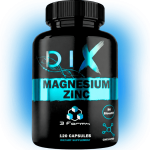
At DIX, we have developed our ZMA formula based on the latest scientific advances. Our goal? To go beyond simple magnesium to offer you a complete and optimal solution against muscle soreness.
Our expertise has led us to carefully select three forms of magnesium with high bioavailability:
Magnesium bisglycinate: our first choice for its direct action on muscles
Magnesium citrate: chosen for its optimal absorption
Magnesium malate: specifically selected for its energy properties
What makes our formula unique? We have enriched it with three complementary forms of zinc, meticulously chosen for their synergy with magnesium. This combination not only helps fight muscle soreness but also optimizes overall recovery.
Our trademark: the addition of vitamin B6, carefully dosed to maximize the absorption of magnesium and zinc.
For optimal results, we recommend taking 2 capsules before bedtime (1 capsule for our Belgian friends, in accordance with legislation). This dosage has been validated by enthusiastic customer feedback and proven results in the field.
Our ZMA at €20 is regularly out of stock, a victim of its own success. An average rating of 4.5/5 attests to the satisfaction of our sporty customers who have adopted it in their recovery routine.
Scientific publications on magnesium and muscle soreness
“Exercise and Magnesium: A Review of Impacts on Physical Performance” (Comprehensive review on the effects of magnesium in sports) PMID: 33009349
“Effects of Magnesium Supplementation on Muscle Performance in Athletes” (Study on the effectiveness of magnesium for muscle recovery) PMID: 31624951
“Magnesium Improves Exercise Performance via Increased Glucose Availability in Blood, Muscle, and Brain” (Research on the mechanisms of action of magnesium) PMID: 34836329
“Effects of Magnesium Supplementation on Muscle Pain and Performance” (Clinical study on muscle soreness) PMID: 28150351
“Impact of Magnesium on Muscle Damage Markers in Athletes” (Research on muscle protection) PMID: 36249983
“Relationship Between Magnesium Status and Post-Exercise Recovery” (Study on the importance of magnesium in recovery) PMID: 34907820
“Magnesium and Muscle Fatigue: A Systematic Review” (Synthesis of knowledge on magnesium and fatigue) PMID: 31691193