SHIPPING FEES
Free from 70,00 € (still 70,00 €)
from
5,90 €


Looking to push your endurance limits? Nicotinamide Mononucleotide (NMN) is making waves in the sports world. This natural precursor of NAD+ is gaining increasing interest among endurance athletes due to its promising effects on aerobic performance.
In this article, we analyze the latest scientific studies and explain how this molecule could revolutionize your sports practice, particularly for running and endurance sports.
Nicotinamide mononucleotide (NMN) is a molecule naturally present in our body that plays a crucial role in cellular energy production. This substance, found in small quantities in certain foods like broccoli, avocado, and raw milk, has become a major topic of interest for athletes looking to optimize their endurance performance.
Simply put, NMN is a direct precursor to NAD+ (an essential coenzyme for energy metabolism), somewhat like the fuel that powers our cells. If you want to understand its functioning in detail, we invite you to read our dedicated article.
What particularly interests us today is its potential to enhance your sports performance, especially in endurance. And believe us, recent research on the subject is truly promising!
Research on NMN and sports performance has multiplied in recent years, with particularly interesting results for endurance athletes.
Two major studies, conducted in 2021 and 2023, have particularly caught our attention as they use rigorous protocols and complementary methodologies.
Let’s first talk about the study by Liao and colleagues, published in 2021. These researchers worked with 48 amateur runners, with an average age of 35 (an age where you’re still quite dynamic!). What’s interesting to note in their protocol is that they tested the “subjects” with different doses of NMN: 300, 600, and 1200 mg per day. Participants followed a training program for six weeks, with regular treadmill tests to measure their aerobic capacities.
Yi’s team took a different angle in 2023, focusing on 80 active middle-aged individuals. Their protocol included the famous 6-minute walk test, (an excellent indicator of endurance capacity). Again, they explored several doses: 300, 600, and 900 mg daily over a period of 60 days.
Note: These two studies stand out for their “double-blind placebo-controlled” approach, (meaning neither the participants nor the researchers knew who was taking what). It’s the most reliable method in research, avoiding placebo effects and biases. We particularly appreciate that they took the time to test different doses, as it really helps us understand how to optimize NMN supplementation.

The study results show that NMN significantly improves endurance performance, with particularly impressive results on ventilatory thresholds and aerobic capacity. The effect is even more pronounced with higher doses, with optimal benefits between 600 and 900 mg per day.
Note: we are going to delve into technical details. You can skip this part if you prefer more simplified answers.
Let’s start with the most striking results: Liao’s study demonstrated a significant improvement in ventilatory thresholds (VT1 and VT2) (those moments when your breathing accelerates during exertion). Specifically, with 900 mg of NMN per day, researchers observed an increase in power at the first ventilatory threshold of 2.13 points on the MET scale (a unit of measurement for exercise intensity), compared to only 0.69 for the placebo group. That’s huge!
The improvements are even more impressive when looking at the maximum oxygen consumption (VO2max) at the VT1 threshold, with an increase of 10.3% for the group taking 900 mg, compared to only 2.1% for the placebo group. To give you an idea, it’s like being able to maintain intense effort 10% longer before really getting out of breath!
On Yi’s study side, the results of the 6-minute walk test confirm this trend. Participants taking 900 mg of NMN increased their walking distance by an average of 150 meters after 60 days of supplementation. It’s like NMN allowed them to do an extra lap around the track!
Moreover, their scores on the SF-36 health questionnaire showed significant improvement, suggesting they felt generally in better shape. The dose-dependent effect is particularly interesting: the higher the dose (from 300 to 900 mg), the better the results.
However, researchers noted that improvement tends to plateau after 900 mg, suggesting there’s no need to go beyond that. What’s fascinating is the physiological mechanism behind these improvements.
Other studies on animal models have shown that NMN increases blood capillary density in muscles and improves blood flow, allowing better oxygenation during exertion. It also enhances endothelial function (the inner lining of your blood vessels), facilitating oxygen delivery to working muscles.
NMN will primarily help you maintain more intense efforts over time rather than increase your maximum speed. Think of it as a “comfort zone expander” in endurance:
you’ll be able to maintain a steady pace longer before reaching breathlessness.
Studies show that runners on NMN can maintain higher intensities at their ventilatory thresholds.
In practice, if you usually run at 12 km/h for 45 minutes before getting out of breath, NMN could help you last nearly an hour at the same pace. This is particularly interesting for your long runs and endurance races!
Let’s be transparent: studies have not shown significant improvement in pure muscle strength.
Grip strength tests showed only minimal improvements but in seniors rather than “young” individuals, averaging from 29.9 kg to 30.5 kg. We won’t make any promises about miracles for your weightlifting performance!
This is more interesting if you are an “all-category” athlete because study participants reported a better subjective feeling of recovery. The scores on the SF-36 questionnaire (which evaluates vitality among other things) improved significantly with NMN.
In short, you might feel less fatigue between your training sessions and recover more effectively. This is particularly interesting if you are following an intensive training program!

According to studies, the optimal dose of NAD is between 600 and 900 mg per day to achieve the best results for your endurance performance. Researchers observed that effects start to be felt after 4 to 6 weeks of regular supplementation.
To get the most out of your supplementation, here’s what I recommend, based on scientific study protocols:
An important point to note: studies show that beyond 900 mg per day, additional benefits are minimal. So there’s no need to overload your body! Scientific protocols lasted between 4 and 12 weeks, with particularly convincing results after 8 weeks of supplementation.
[Insert here widget: CALCULATOR]
Description: Calculator “How much NAD should I take per day?” (Age, Weight).
YES: NAD has an excellent safety profile, even at high doses up to 1200 mg per day. Across all analyzed studies, no serious side effects were directly attributed to NAD supplementation.
An important point to note: unlike other NAD+ precursors that can cause hot flashes or unpleasant redness, NAD is remarkably well tolerated.
After reviewing all scientific studies on NAD and sports performance, you will understand how interesting this supplement is for endurance and why it is essential to choose a quality product to achieve the demonstrated results.
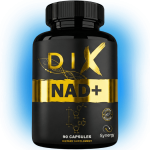
That’s exactly what we offer with our NAD DIX, specially formulated for endurance athletes. Our NAD stands out for its exceptional quality and 99.9% purity, certified by independent laboratories (GMP and HACCP certifications).
We use a unique enzymatic process that ensures optimal bioavailability, essential for replicating study results like Liao’s showing a 30% improvement in aerobic capacity.
To be completely transparent with you: the scientific studies we analyzed used high-purity NAD, like the one we offer.
Indeed, obtaining NAD through diet alone is almost impossible: you would need to consume (brace yourself) 100 kg of broccoli or 69 kg of avocado to get the equivalent of a daily dose of 250 mg!
Each capsule of NAD DIX contains the optimal dose established by research, which is 600 mg of pure NAD, allowing you to reach the maximum effectiveness zone demonstrated in studies (between 600 and 900 mg per day).