SHIPPING FEES
Free from 70,00 € (still 70,00 €)
from
5,90 €


Nicotinamide mononucleotide (NMN) is generating a lot of buzz in the field of longevity and wellness. But what about its safety? With a surge in sales and sometimes exaggerated promises, it is crucial to understand the potential side effects of this dietary supplement.
NAD⁺ (nicotinamide adenine dinucleotide) is an essential coenzyme present in all our cells. It is involved in energy production, DNA repair, metabolism regulation, and maintaining proper cellular function.
As we age, NAD⁺ levels naturally tend to decrease, which could contribute to certain signs of aging and a decline in metabolic performance.
NMN (nicotinamide mononucleotide) is one of the natural precursors of NAD⁺. It is produced by the body and found in very small amounts in certain foods like avocado, broccoli, cabbage, or tomato.
A significant amount of these foods would need to be consumed to obtain even a few milligrams of NMN.
This is why supplementation with NAD⁺ precursors has become popular in recent years. NMN, for example, is often offered in capsule or powder form, with dosages generally ranging from 50 to 500 mg per intake.
Research suggests that increasing NAD⁺ levels could have beneficial effects on mitochondrial function, insulin sensitivity, and certain aging markers. However, human clinical data remains limited, and long-term effects require further studies.
For now, short-term trials indicate good tolerance, with no major adverse effects observed at commonly used doses.
In recent years, several studies have focused on NAD⁺ and its precursors such as NMN (nicotinamide mononucleotide) and NR (nicotinamide riboside).
Research is generally reassuring. A systematic review published in 2024, involving more than 400 participants, concluded that supplementation with NAD⁺ precursors was well tolerated and no serious adverse effects were observed, even at doses ranging from 250 to 1000 mg per day.
Among the most notable studies:
The side effects reported in these studies are very rare and mild: mild nausea, temporary headaches, or digestive discomfort. Nothing comparable to the side effects sometimes observed with other supplements.
On the other hand, NADH (the reduced form of NAD⁺) has also been tested in humans, particularly for its effects on fatigue and concentration. Clinical trials show good tolerance up to 25 mg per day, with no notable issues reported.

The clinical studies available to date are very reassuring. Among more than 400 participants studied in various trials across all molecules, only a few isolated cases of mild side effects have been reported, and none were considered serious. Most of these effects were temporary, often unrelated to supplement intake.
Common minor effects observed in studies:
It is interesting to note that in several studies, including Okabe et al. (2022), these symptoms occurred at similar frequencies in the placebo group, suggesting they are not necessarily related to supplementation.
Researchers have also taken care to distinguish effects truly attributable to NAD⁺ from those due to other factors. For example, in some studies, isolated cases of acne or hypertension were observed, but no clear causal relationship was confirmed.
Finally, even at high doses, up to 1200 mg per day in some clinical studies, no serious side effects were observed. Researchers therefore conclude that NAD⁺ precursors have an excellent safety profile for short-term use.
The safe use of enzymes primarily relies on two elements: adhering to appropriate dosages and proper product storage. The clinical studies published so far have established dosage ranges considered safe for daily use.
Research shows good tolerance for doses ranging from 250 to 900 mg per day depending on the molecule and the individual’s profile. Some trials have even used up to 1200 mg/day without observing serious side effects.
As an indication, here are the dosage ranges frequently mentioned in scientific literature for supporting cellular metabolism:
A simple alternative is to estimate the dose based on body weight: approximately 8 mg per kilo of weight. (For example, for 70 kg = about 560 mg per day)
Certain individuals should exercise particular caution before consuming these molecules:
Key points for storage:
It is generally recommended to take NAD⁺ precursors in the morning, with a meal containing a source of lipids. This combination promotes better absorption and supports cellular energy throughout the day.
A few isolated cases of headaches have been reported in some studies, but they were rare and often unrelated to supplementation. The observed frequency was similar in placebo groups.
Yes. Clinical trials conducted on NR, NMN, and NADH confirm that daily intake is well tolerated for several weeks, without notable side effects.
Morning intake is generally recommended, as it supports energy production and cellular metabolism throughout the day.
However, some studies suggest that the timing of intake could slightly influence sleep. For example, research conducted by Kim et al. observed that taking it in the late afternoon could improve sleep quality in some elderly individuals. These effects remain mild and variable among individuals.
To date, no long-term risks have been identified in human clinical studies. However, most trials have not exceeded 12 weeks, meaning that effects over several months or years remain to be better documented.
Longer animal studies remain reassuring regarding overall safety.
No significant drug interactions have been identified to date. As a precaution, it is advisable to consult a healthcare professional before starting supplementation, especially if undergoing current medical treatment.
Some experts, including Dr. David Sinclair, suggest combining a source of TMG to support methyl group metabolism when increasing intake.
However, research remains limited and this combination is not considered essential at this time.

In view of the studies presented and the importance of the quality of NAD⁺ precursors to ensure efficacy and safety, the choice of your supplement plays a determining role.
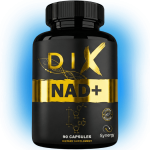
Our NAD⁺ DIX meets the highest quality standards mentioned in scientific publications. Every step of our production is designed to preserve the integrity of the ingredients and maximize their bioavailability:
Enzymatic production
on each batch to ensure 99.9% purity
As clinical studies have shown, product purity is essential to ensure its effects on natural
“Efficacy and safety of β-nicotinamide mononucleotide (NMN) supplementation in healthy middle-aged adults: a randomized, multicenter, double-blind, placebo-controlled, parallel-group, dose-dependent clinical trial” (Major study on NMN safety at different doses)
10.1007/s11357-022-00705-1