Article
How to Recognise the Best Shilajit: A Purity and Quality Guide
Faced with the variety of Shilajit on the market, how can you be sure to choose the best?


Shilajit is the story of a substance used for centuries in Ayurvedic medicine that became, in the space of a few months, a social-media darling. Inevitably, when a supplement rises that fast, the good and the nonsense travel together. So let us set the record straight, without the overselling: what this resin really is, what it contains, what it can genuinely do for you according to the research, and how to use it without getting it wrong.
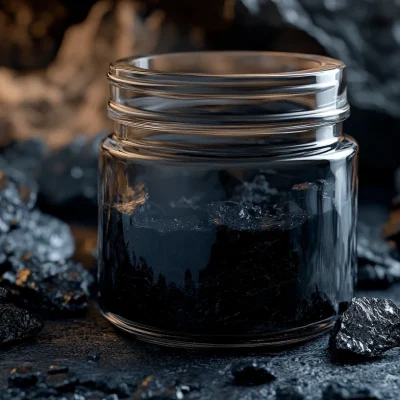
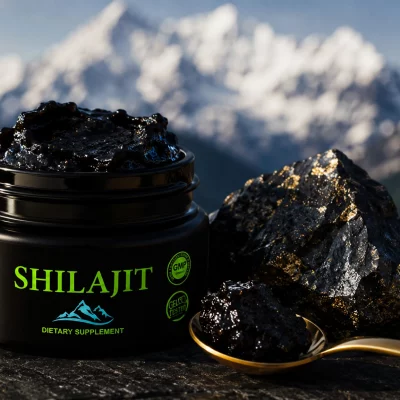
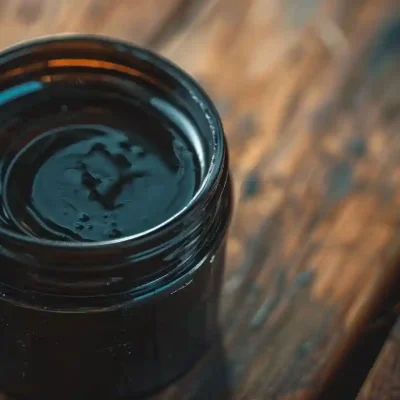
Shilajit is a natural resin, black and sticky, harvested mainly in the high mountains of the Himalayas. It forms very slowly, over centuries, from plant matter trapped and decomposing between the rocks. Not quite mineral, not quite plant: a bit of both, which is what gives it its particular richness.
In the Ayurvedic tradition it is nicknamed the “conqueror of mountains” and the “destroyer of weakness”. The nicknames are flattering; below we will look at what science actually stands behind.
Origin matters more than people think. The composition of Shilajit varies with the geography and the altitude it is collected at. A high-altitude Shilajit from a preserved environment does not have the same profile as a resin gathered just anywhere. It is the first thing to check before you buy.
If you had to remember a single component, it would be fulvic acid. The word “acid” worries some people, wrongly: here it helps carry nutrients to the cells and improve their absorption, while playing an antioxidant role. You also find humic acid and dibenzo-alpha-pyrones, regarded as the other major active compounds.
A useful benchmark: a natural Shilajit usually contains between 20% and 50% fulvic acid. Above 50%, be wary, it is often the sign of a synthetic addition. Here too, more is not better.
Shilajit contains more than 85 minerals and trace elements: iron, zinc, magnesium, calcium and many others in tiny amounts. They are not there to cover your daily requirements (the doses are far too small for that), but they reflect the natural, complex character of the resin. It is the whole that works, not one isolated mineral. For the detail, see our guide to the 85 minerals in Shilajit.
This is the heart of the research. I will be honest about the level of evidence each time, because on this subject a lot of articles confuse a study in mice with a truth set in stone.
Energy and physical performance. This is the best-documented use. Shilajit appears to support the function of the mitochondria, the “power stations” of our cells, and therefore the renewal of ATP. Several pieces of work, including animal models and comparisons with other energy supports, point in this direction. A recent pilot study in active men also reported gains in strength and endurance over 28 days with no serious adverse effect, but on a small sample and without a placebo: an encouraging signal, not a demonstration.
Testosterone and male vitality. One placebo-controlled study in men aged 45 to 55 observed a significant rise in testosterone after supplementation. It is one of the more solid human results in the file, though it needs confirming in larger populations. To be clear, and because the law requires it, this is not an approved health claim: we report the study, we do not promise a result.
Cognitive function and stress. Preliminary data suggest an effect on memory, focus and cortisol modulation. It is promising, but still thin on human evidence. Treat it as a lead, not a promise.
Antioxidant. Fulvic and humic acids contribute to the body’s antioxidant defences, which may explain part of the effects observed.
In short: a credible support for energy and vitality, with the rest still belonging to research. Shilajit is not magic, and it will never replace the trio of sleep, food and training.
Worth stating plainly. In the UK, Shilajit is regulated as a food supplement by the FSA, not as a medicine by the MHRA; in the US it falls under the dietary-supplement framework (DSHEA). In both cases the maker does not have to prove efficacy before selling it, and no health claim about Shilajit has been officially approved. That is precisely why we describe uses and evidence levels rather than making disease claims, and why the quality of the resin, backed by lab analysis, is the thing worth judging.
Resin is the most authentic form and the easiest to judge by eye: colour, texture, how it dissolves. Capsules are more convenient and more precise to dose, but require trusting the manufacturer on the contents. Neither is “better” in absolute terms, it depends on what you are after. To choose well, see how to recognise a pure, reliable Shilajit.
Faced with the variety of Shilajit on the market, how can you be sure to choose the best?
The common dose is around 250 to 500 mg per day, preferably in the morning, with resin dissolved in a warm liquid. Start small, observe, and do not overdose. For the full detail on dosage and instructions, see our dedicated guide to taking and dosing Shilajit.
Are you wondering how to integrate Shilajit into your routine? When to take it to maximize its effects? What is the ideal duration of a course?…
The real question is less the substance than the quality. A purified, tested Shilajit is well tolerated; the risk comes from low-grade, unpurified resins that can carry heavy metals, and even thallium in some commercial products. We cover all of this in our article on the side effects and risks of Shilajit. The golden rule stays simple: always ask for the laboratory analysis of the product you are buying.
Let us be honest: if you are searching for "shilajit side effects", it is not out of idle curiosity. Something put you off. A video calling…
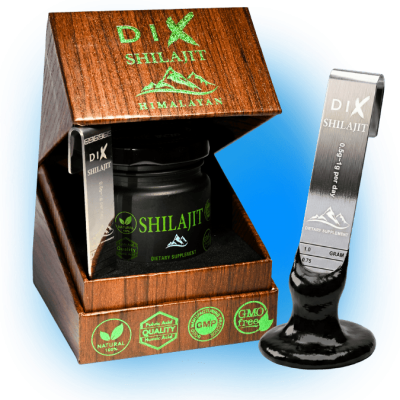
Our resin is sourced directly from high-altitude Himalayan deposits, as far as possible from human pollution, standardised to a natural fulvic acid level, and the finished product is tested by an independent laboratory, heavy metals included. Judge it the way we ask you to judge any Shilajit: on the analysis.
Gold Grade Purity: 100% natural Shilajit resin, harvested at 5000m altitude in the Himalayas and cold purified. Exceptional…
In stock
A natural Himalayan resin, formed over centuries, rich in fulvic acid and more than 85 minerals. It has long been used in Ayurvedic medicine to support energy and vitality.
It varies by person and goal. Studies on energy and performance usually run over several weeks of regular intake. Shilajit is a course, not a magic wand.
One placebo-controlled study in men aged 45 to 55 observed a significant rise. The result is encouraging but needs confirming in larger populations, and it is not an approved health claim.
Resin is the most authentic form and the easiest to assess; capsules are more convenient to dose. It mainly depends on your use.